
Dallas–Fort Worth Metroplex, Texas
Is your speedometer
telling you the truth?
We measure your vehicle's real speed with calibrated, police-grade RADAR and LiDAR - the same equipment used at the roadside. You get every reading we take, written down.
- Know your true speed before you pace another car or get pulled over.
- Real-life readings that don't need an expensive test
- See just how fast police can lock onto you
±1 mph
Accuracy, across repeated readings
0–520 mph
Combined measurable target speed
4,000 ft
Rangefinding reach
4 + 3
LiDAR and RADAR units in service
Did you know police can pull you over for going even just a few mph over the limit?
A few miles per hour is well inside the error a worn set of tires, a wheel swap or a slightly optimistic factory speedometer can introduce. Most drivers never find out until somebody with a calibrated instrument points one at them - and by then it costs money. We would rather you found out from us.
What we do
We point calibrated instruments at your vehicle and write down what they say.
No modelling, no estimates, no assumptions about your tire size. A measurement of the actual vehicle, moving, in the real world.
How a session runs
- 01
You pick a location
Your street, a school zone, a parking area, a closed course - wherever the measurement actually needs to happen. We set up where the geometry is good and the site is legal to work from.
- 02
Both technologies come out of the case
Radar goes up to track continuously and catch the speed as it happens. Lidar takes discrete, pinpoint locks with a range attached to each one. For extra due diligence, of course.
- 03
We verify the instruments, on site, in front of you
Tuning forks on the radar. Internal circuit test. Lidar checked against a known fixed distance, then radar and lidar checked against each other. Only then do we start recording your numbers.
- 04
Multiple runs at multiple speeds
We hold several target speeds across the range you care about and take repeated readings at each one, because speedometer error usually scales with speed rather than sitting at a fixed offset.
- 05
You get the findings on paper
Every reading, the conditions, the equipment and its serial numbers, and what your indicated speed was against what we actually measured.
RADAR and LiDAR, together
Radar reads the speed you are doing right now and tracks it continuously. Lidar takes a precise, pinpoint measurement of the target as it moves, with the exact range attached. Run both and each one covers the other's weak spot.
On a motorcycle we lean on radar - a bike gives lidar very little flat surface to lock onto, while radar does not care.
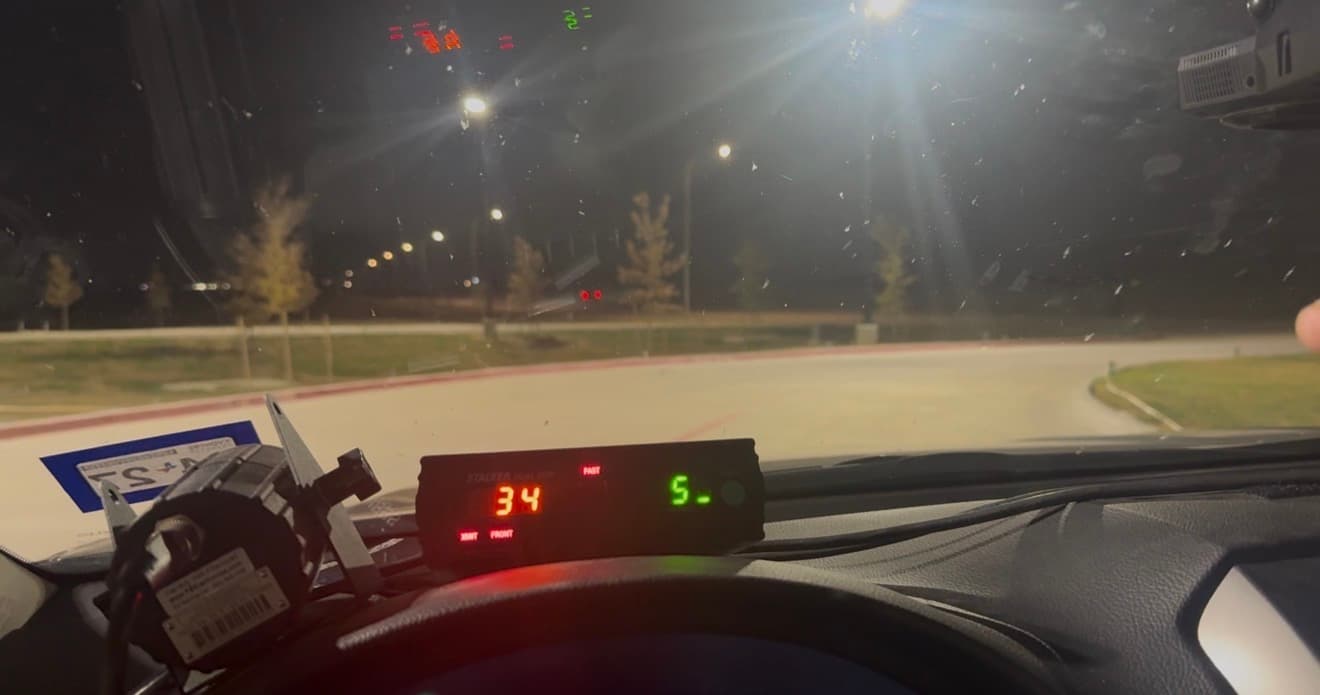
Proof of work
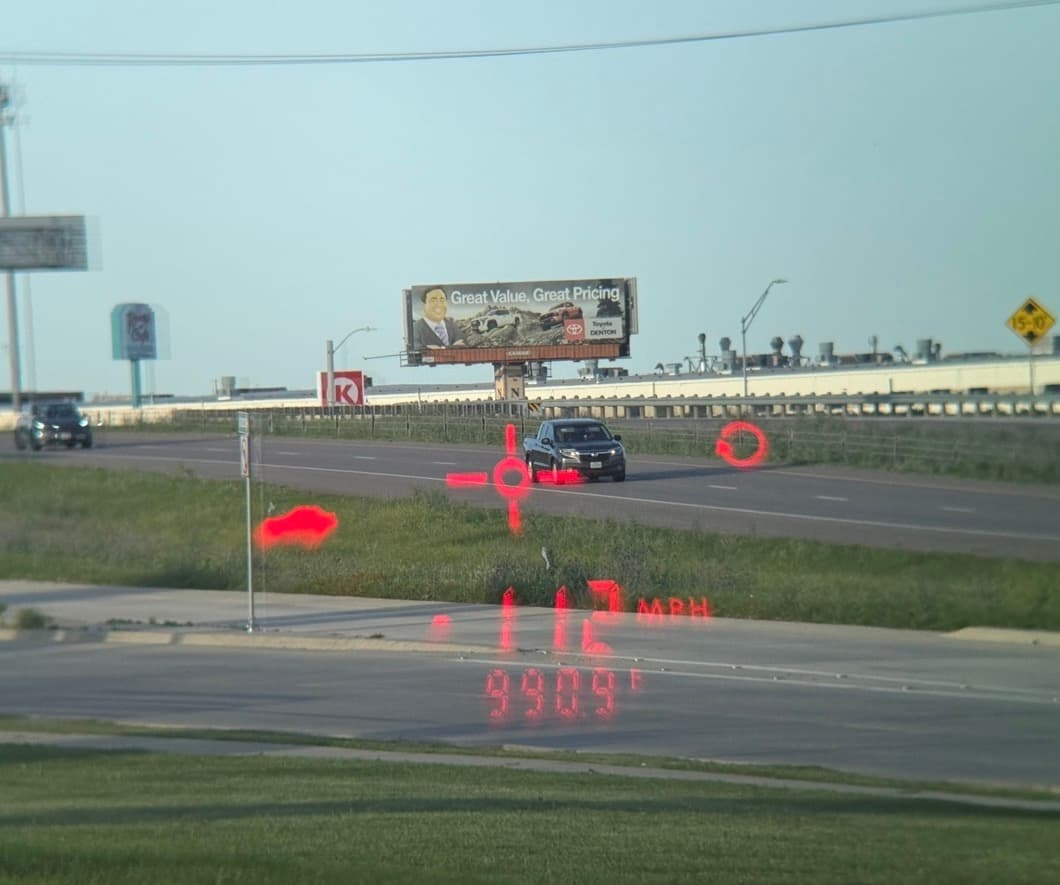
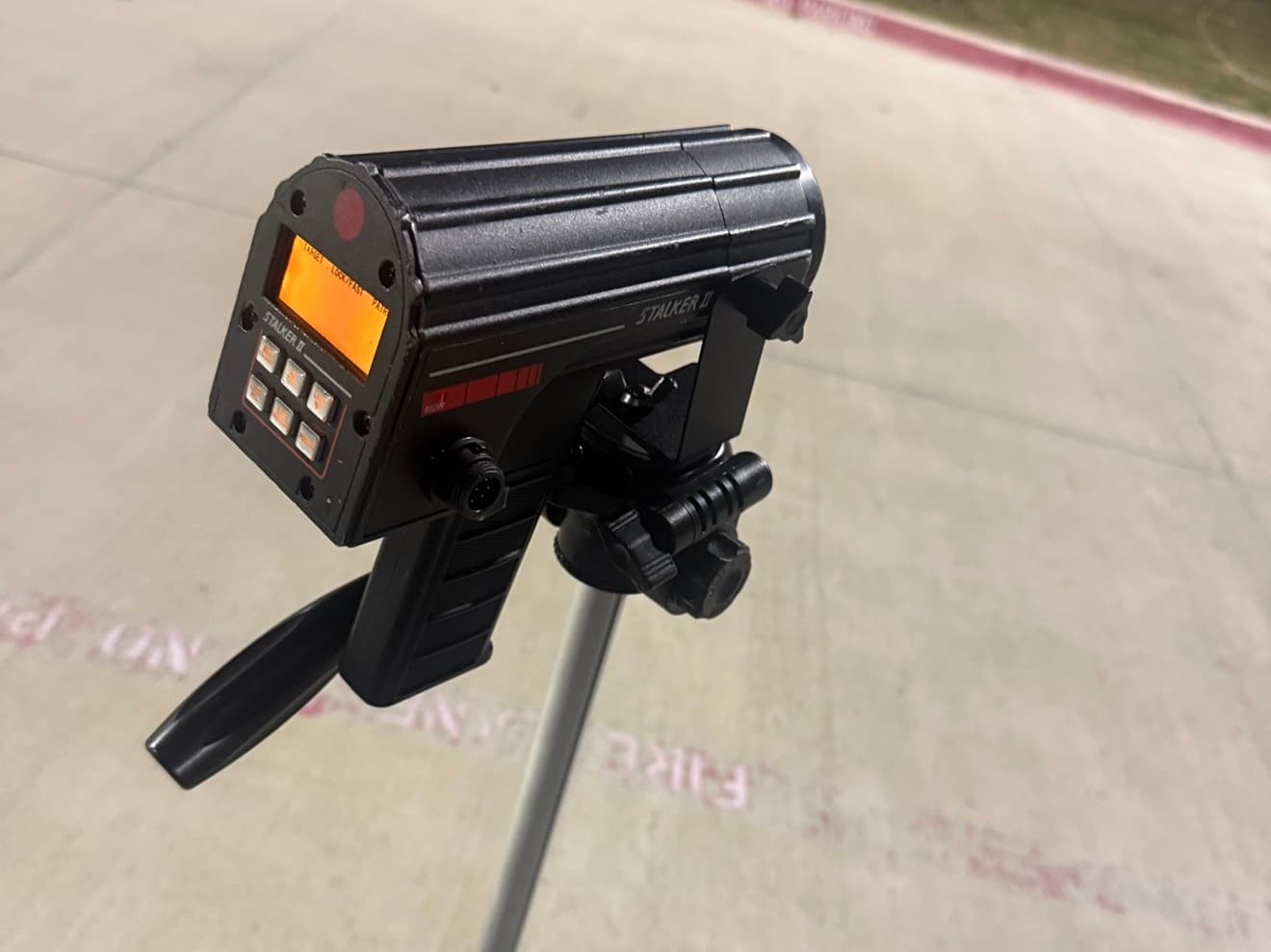
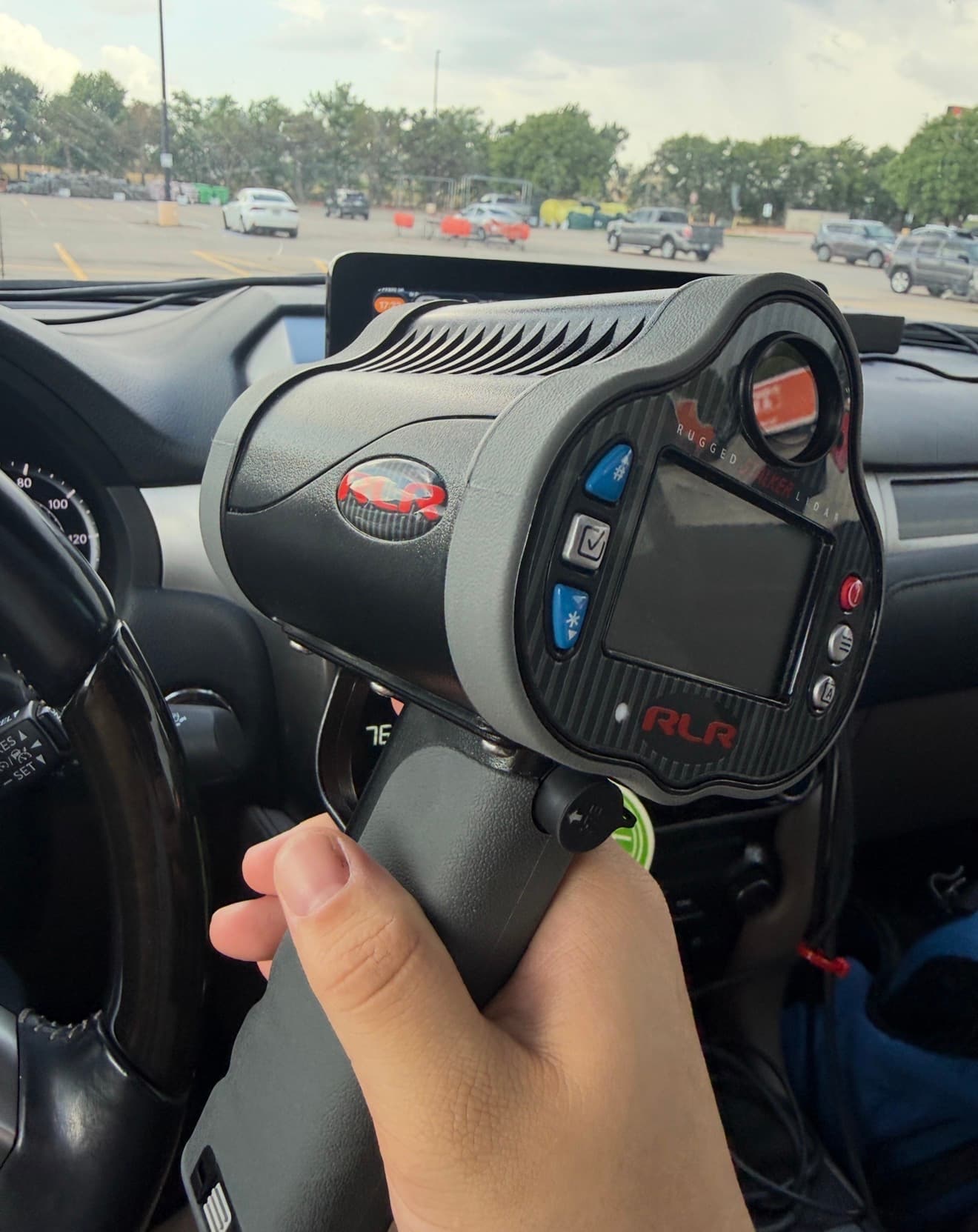
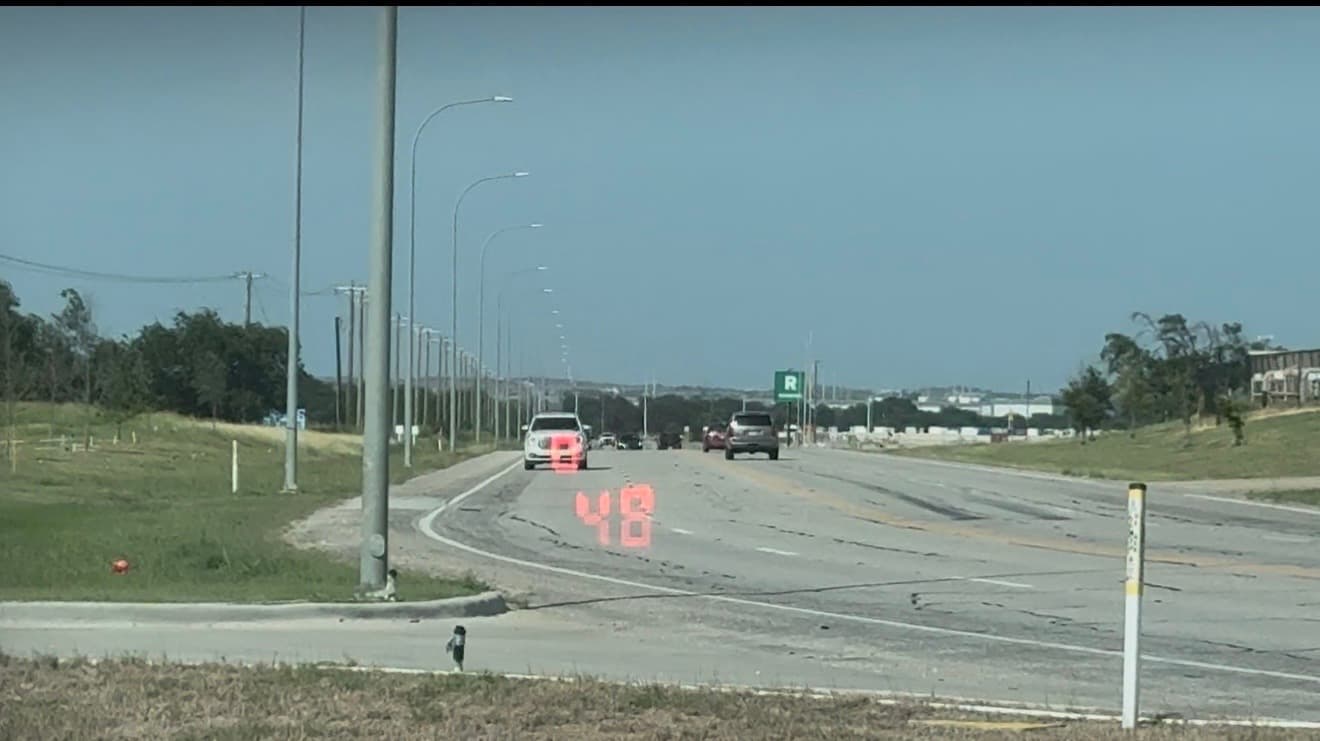
Real readings, from our own equipment.
Not stock photography and not a rendering. These are frames from our units, in the field, with the numbers on the display.
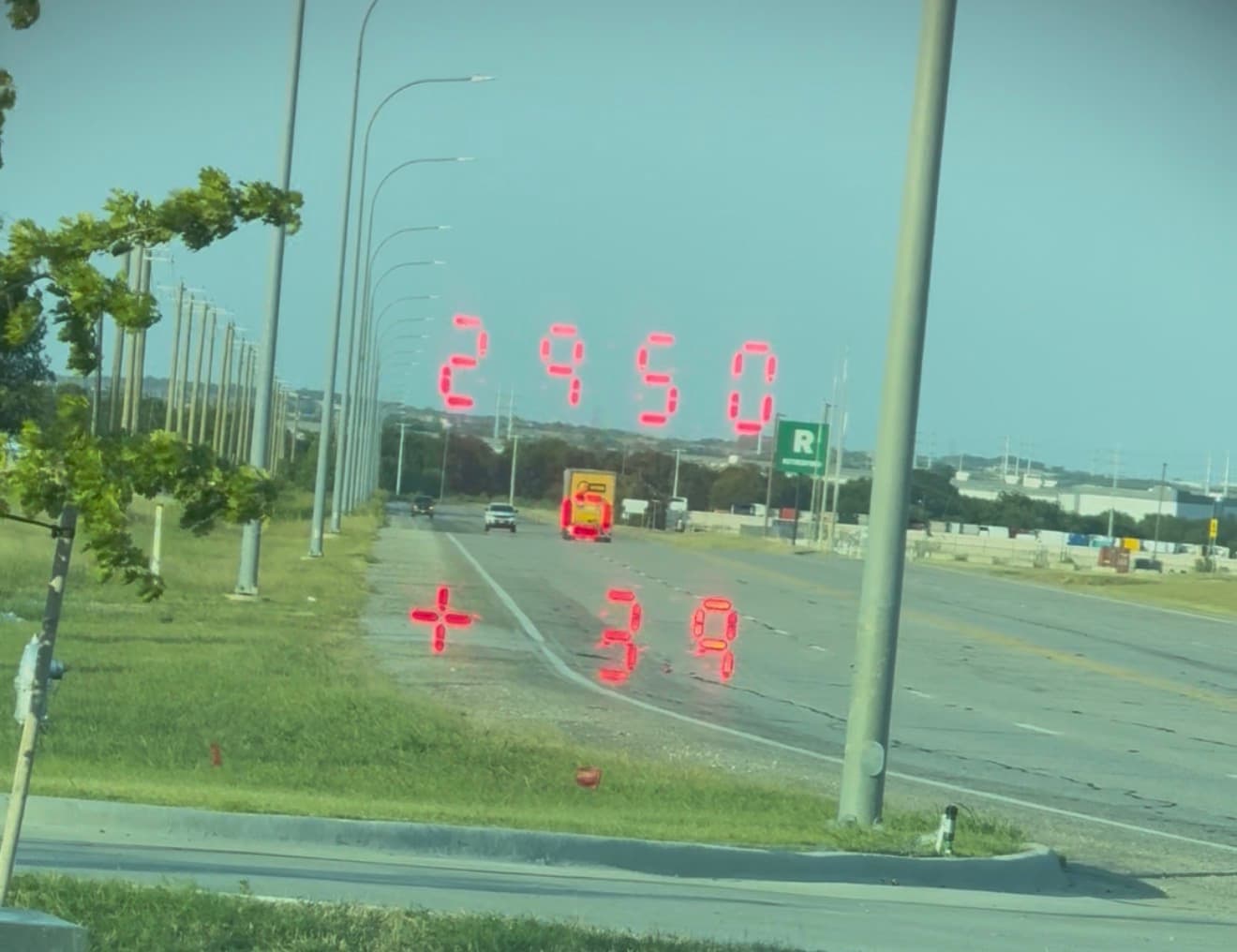
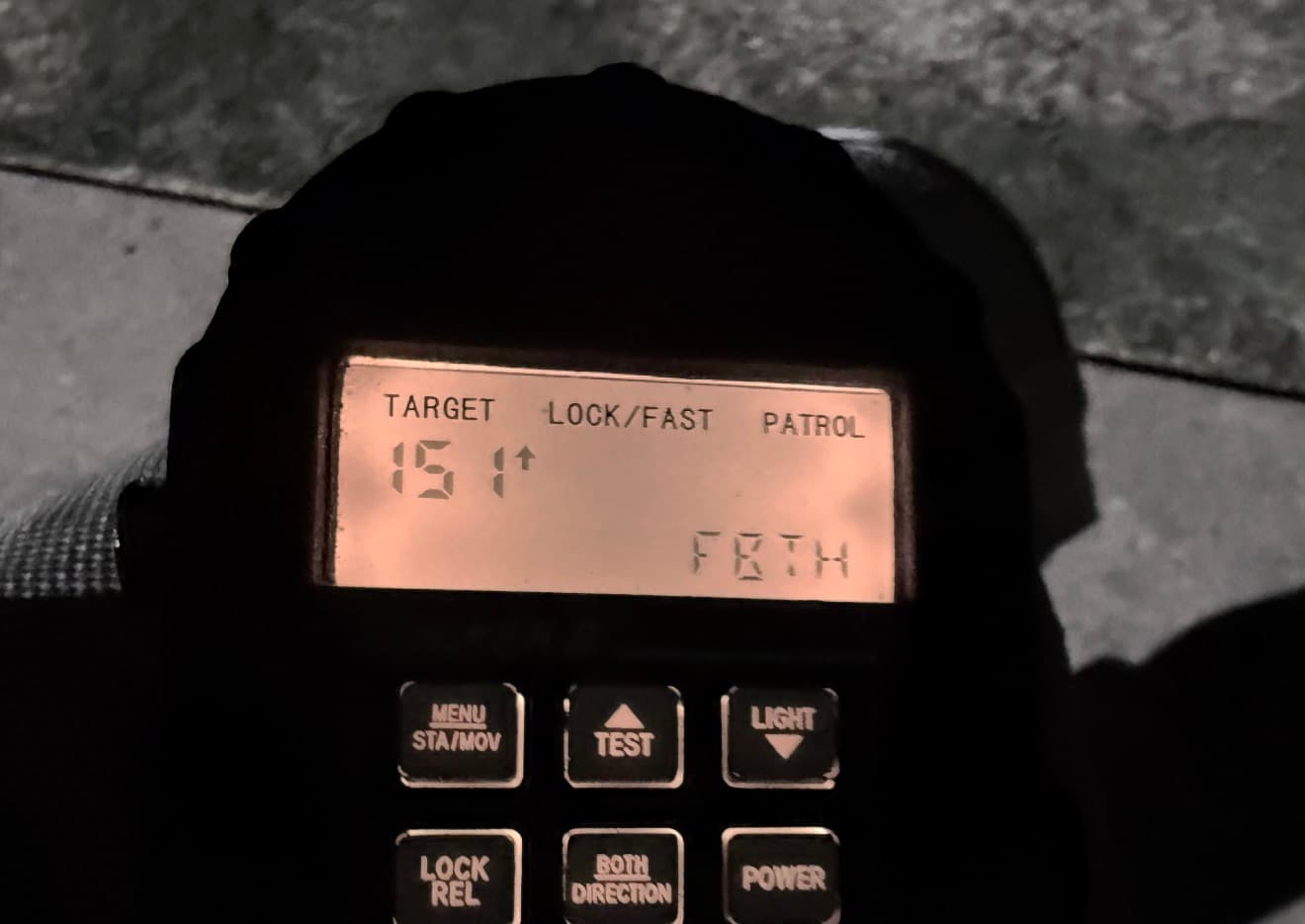
See it in use
Watch the equipment work.
Laser footage is up now. The radar footage is shot and waiting on our FCC licence, because publishing it sooner would advertise something we are not yet authorised to do.
Stalker RLR
Our rugged handheld lidar working in the field.
LTI TruSpeed S
Pushing the unit out toward the far end of its published range.
Publishing once licensed
TX DPS trooper pulls over for 15+ over on motor speedway - aerial footage
This footage shows a RADAR unit transmitting. We will publish it once our 47 CFR Part 90 licence is granted - not before.
Stalker Dual DSR
Footage involving the Dual DSR.
Why not just use a dyno?
LiDAR and RADAR versus a chassis dyno.
A dyno is a genuinely good instrument, but it's going to cost you. It tells you your torque, horsepower, and speed, for a premium.
| Criterion | LiDAR | RADAR | Chassis dyno |
|---|---|---|---|
| What it actually measures | Your vehicle's true speed over the ground, by light's travel time. | Your vehicle's true speed over the ground, by Doppler shift. | Roller surface speed, converted to an assumed road speed. |
| Conditions | Real world - on the road, loaded, in traffic. | Real world - same road, same load, same day. | Stationary and strapped down. No road load, no airflow. |
| Stated accuracy | ±1 mph. | ±1 mph stationary, ±2 mph moving. | Typically ±1–2% of reading, and setup-dependent. |
| Time to a reading | ~0.3 s per lock. | Instant, and continuous - a whole speed history, not one sample. | A full run, plus operator and strap-down time. |
| Picking your vehicle out | Pinpoint. A ~3 ft beam at 1,000 ft puts the dot on your car and nothing else. | Wide beam - returns the strongest and fastest target in it. | One vehicle at a time, physically fixed in place. |
| Motorcycles | Harder to lock - small, angled reflective area. | Preferred. No flat reflector needed. | Needs a motorcycle-specific dyno. |
| Tire-slip error | None. It measures the vehicle, not the wheels. | None. | Roller slip and tire deformation both offset the number. |
| How it stays honest | Cross-checked against radar and against a known fixed distance. | Tuning forks every session, plus the internal circuit test. | Scheduled service calibration. Drifts as rollers wear. |
| Where it happens | Your street, your school zone, your track. | Same - we come to you. | You drive to the facility and book the time. |
| Cost | Low, and mobile. | Low, and mobile. | High, and tied to the building it sits in. |
Accuracy figures are the manufacturer-published specifications for the units in our inventory. Dyno figures are typical of a well-maintained chassis dynamometer.
We do our due diligence
The things that can bend a reading - and what we do about each one.
Every one of these is a known effect with a known sign. Our equipment was built to work around them, because it is what the police use, after all.
The cosine effect
Measure a vehicle at an angle and you always read low - never high. The error is the cosine of the angle between the beam and the direction of travel. We set up as close to parallel with the path of travel as the site allows, record the geometry we used, and note it in your report. If a number is going to be off, we make sure it is off in the direction that cannot inflate your speed.
Atmospheric conditions
Rain, fog, dust and heat shimmer all cut laser range and can scatter a return. Radar shrugs most of it off, which is exactly why we carry both. We log temperature, visibility and surface conditions with every session, and if the weather is fighting us we say so and re-run rather than handing you a soft number.
Multiple runs, multiple speeds
One reading is an anecdote. We take repeated readings at several speeds across the range you care about, because a speedometer error is usually a percentage - it grows with speed. Four hold points tell you far more than one pass ever will.
Instrument against instrument
This is the part a dyno cannot do. Radar and lidar are completely independent technologies - one radio, one optical. When a Ka-band radar and a 905 nm laser agree on your speed to the mile per hour, that agreement is itself a calibration check, and we run it on every job.
Services
Three ways we work.
Speed measurement
A specific vehicle or object, measured against calibrated equipment at several speeds, with every reading recorded.
Residential & spot monitoring
Speed studies for your street, your neighborhood or a school zone. We set up where you ask and count what actually goes past.
Rangefinding
Precise distance measurement with our lidar units, out to 4,000 ft.
Come and operate it yourself
You are welcome to test with us live and run our LiDAR equipment under supervision. Aim it, take the lock, read the number off the display yourself. Nobody has to take our word for anything - which is the entire point.
Not just cars
We measure moving objects, and a vehicle is only one kind. Drones, boats, aircraft, rolling stock, RC and track machinery are all fair game - if it moves and we can get a return off it, we can put a number on it.
Combined RADAR + LiDAR
How we reach 520 mph.
No single instrument in the world reads that high. Two of them, working from the same moving vehicle, do - because their measurements add.
A radar in moving mode does two jobs at once: it reads the target, and it reads our own patrol speed off the road surface beneath us. Meanwhile a second operator in the same vehicle takes laser locks on the target ahead.
The laser is measuring the target relative to a platform that is itself moving. Add the patrol speed the radar just measured, and you have the target's true speed over the ground - well beyond what either instrument could reach standing still.
up to 200 mph
Patrol speed, by radar
Our own vehicle
up to 320 mph
Target speed, by laser
Relative to us
520 mph
True target speed
The two, summed
Stationary work is simpler and covers almost every job: 320 mph on laser, 199 mph on radar, ±1 mph either way. The moving-platform method is what we bring out when the target is faster than any one instrument, and it runs on a closed course.
Two operators, one vehicle
One of us drives and runs the radar; the other works the laser. The radar's patrol reading and the laser's lock are taken at the same instant, so the two numbers describe the same moment rather than two different ones.
Errors stay small because they stay separate
Both instruments are ±1 mph devices measuring independent quantities, so the combined figure does not compound a single instrument's error - it carries two small, unrelated ones. We still run the whole thing several times and report the spread.
Operating RADAR requires an FCC licence. LiDAR does not.
Application pendingPolice-type Doppler radar transmits in the licensed K and Ka bands, so operating one is regulated by the FCC under 47 CFR Part 90 and needs a station licence. LiDAR is optical - an infrared laser, not a radio transmitter - so it carries no FCC licensing requirement at all. Our Part 90 application is currently pending under application number [FCC application number - pending]. Until the licence is granted we schedule laser-only work, and we will tell you plainly which instruments are on the job before you book it.
How licensing affects each unit →Got a ticket, and think your speedometer is wrong?
Bring us the vehicle. We will measure it at several speeds, cross-check radar against laser, and give you the readings in writing. Tell us what you need and we will quote it.