
Calibration & verification
We use only the most certified police equipment.
A calibration certificate proves an instrument was right on the day it left the bench. Field verification proves it is still right today. We do both, and we show you both.
Certificate on file
LTI TruSpeed S
LTI TruSpeed S
LIDARRecord on fileLaser Technology, Inc. - model TSS
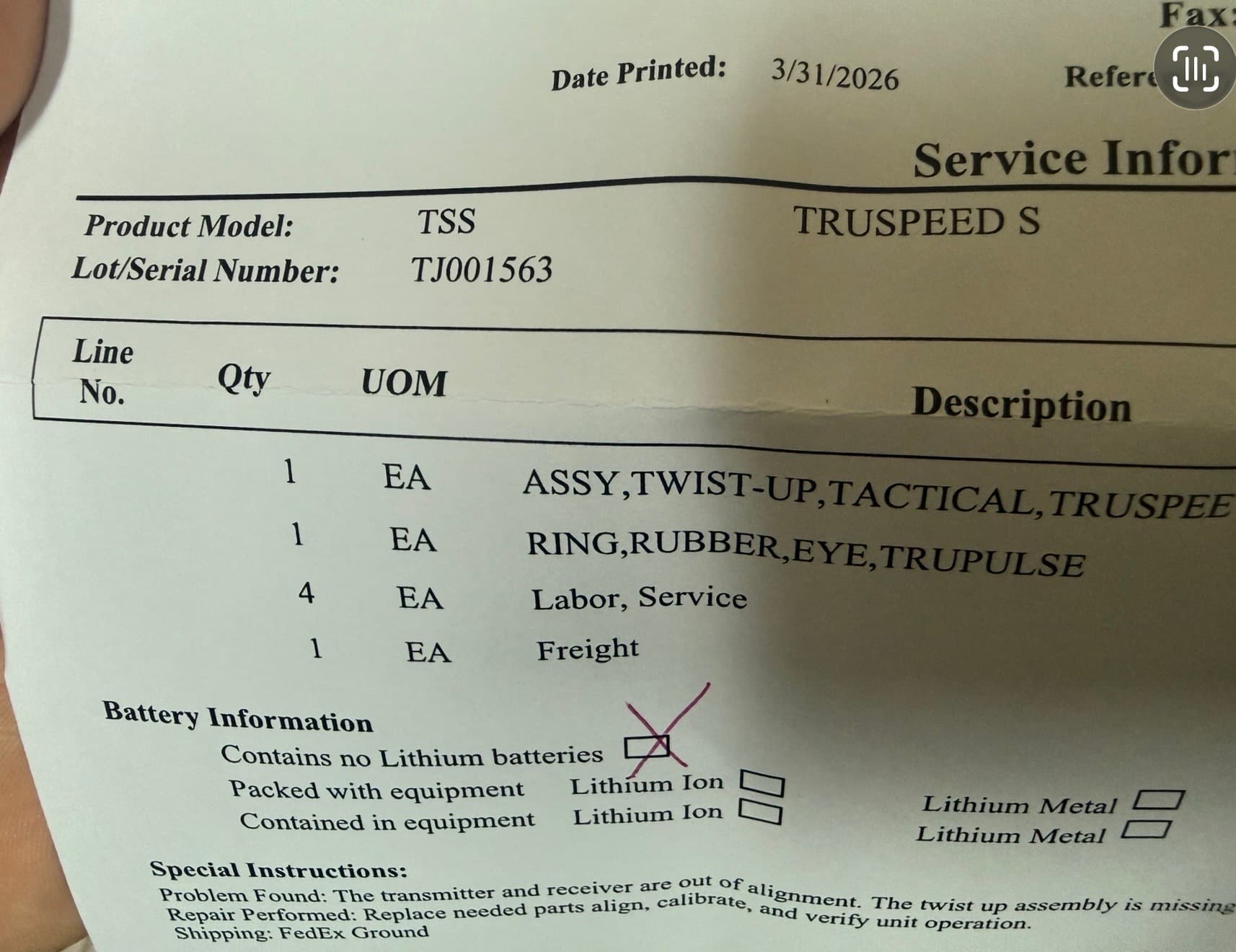
What the record shows
- Instrument
- LTI TruSpeed S
- Product model
- TSS
- Lot / serial number
- TJ001563
- Performed by
- Laser Technology, Inc.
- Document date
- 31 March 2026
- Work performed
- Align, calibrate, verify
The unit went back to the manufacturer, where the transmitter and receiver were realigned, the instrument was calibrated, and its operation was verified before release. That is the strongest provenance a speed instrument can carry: the people who built it are the people who signed it off.
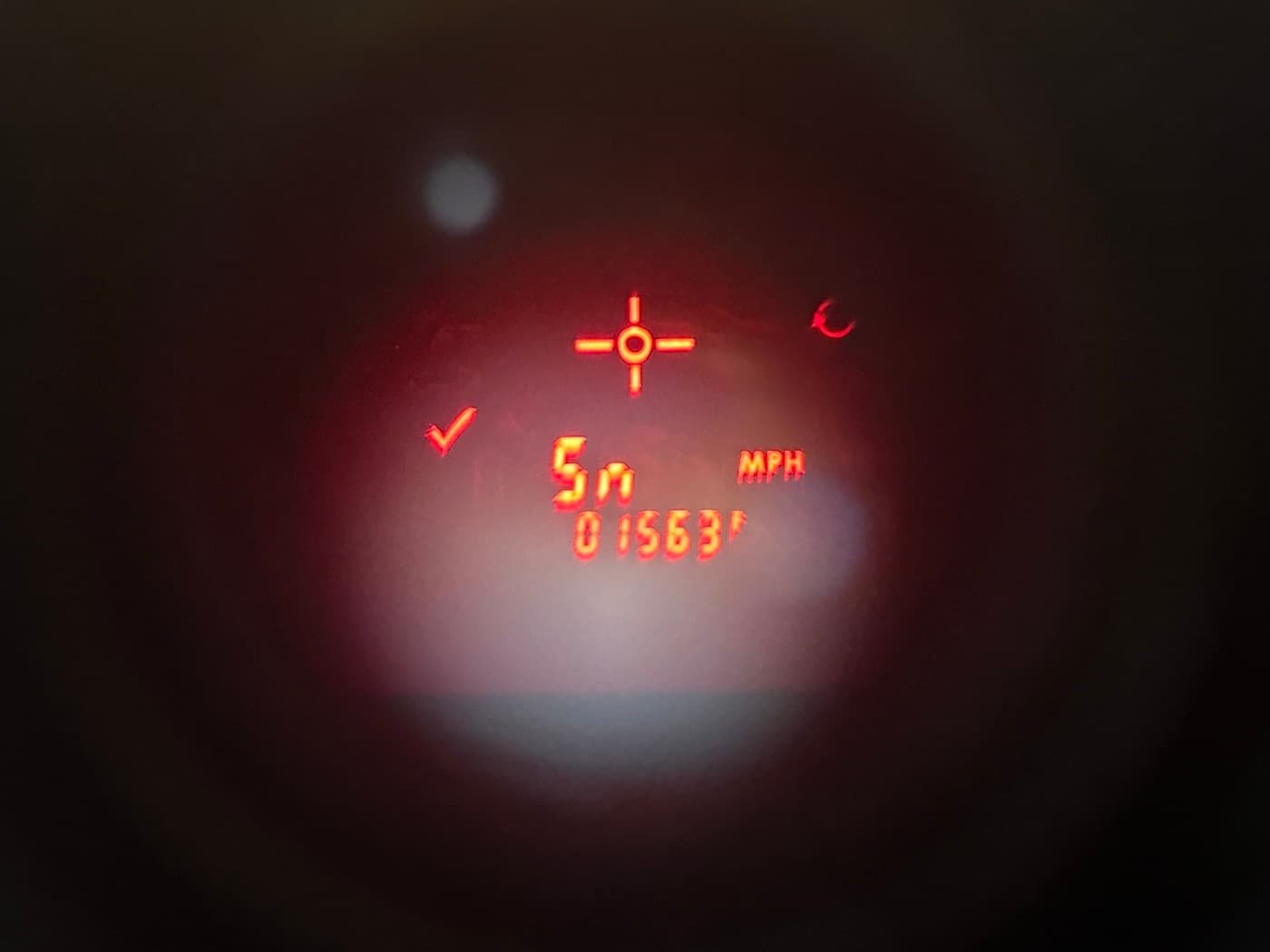
A certificate is only worth anything if you can tell which instrument it belongs to. So we show both halves: the record lists lot and serial TJ001563, and the unit itself reports Sn 01563 on its own heads-up display. Same instrument, and you can check that yourself in person.
This is the reason the TruSpeed S is our reference laser. Every other unit in the inventory gets cross-checked against it.
Radar verification
Tuning forks
The oldest and most direct check in the trade, and still the one that matters. A certified fork vibrates at a known frequency, the radar sees that as a known speed, and either the number on the display is right or the unit does not go to work.
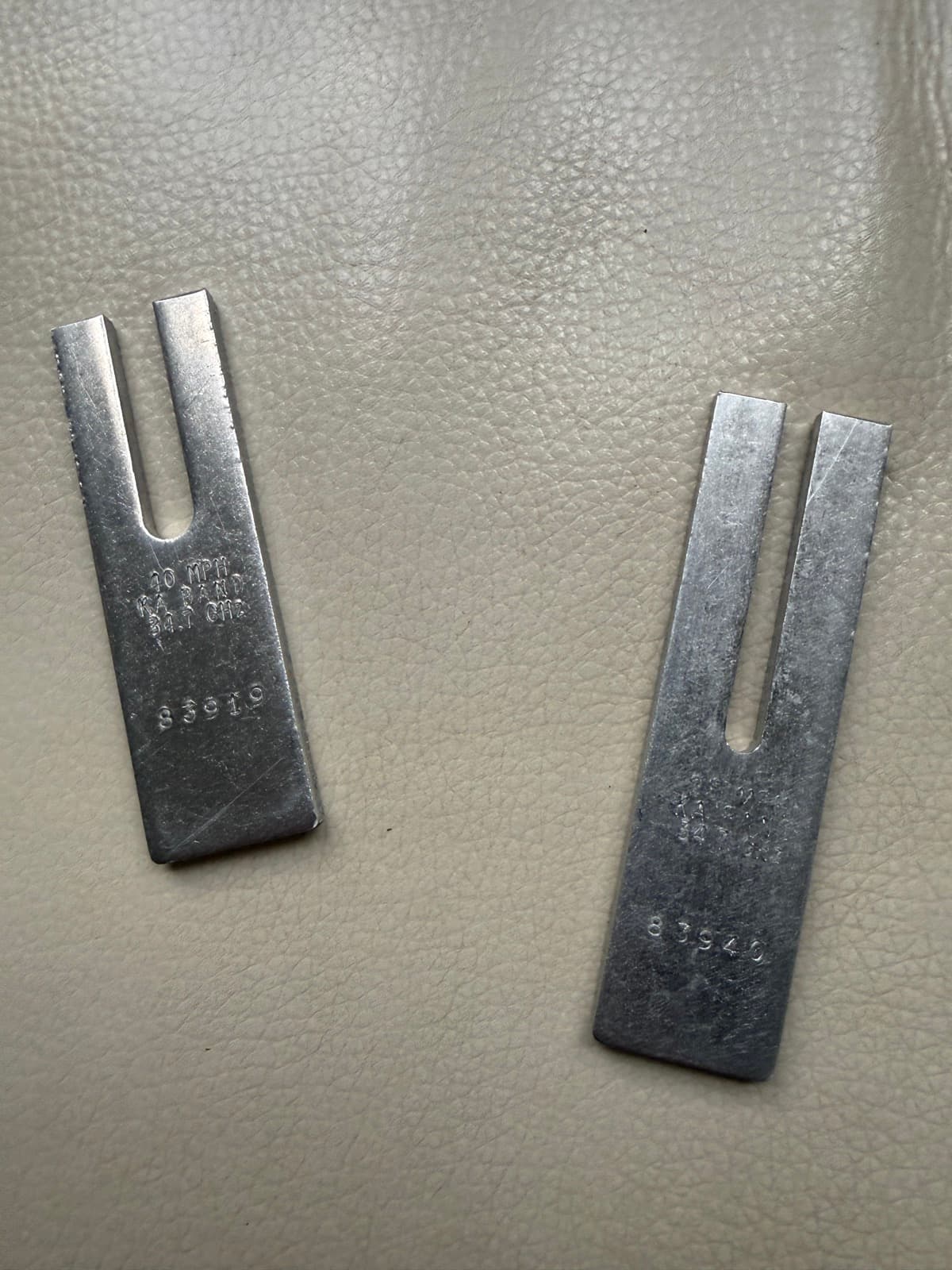
Forks are frequency-specific. A fork cut for Ka band will not verify a K-band unit and vice versa, because the speed a radar reports depends on the Doppler shift at its own operating frequency. Ours are stamped 34.7 GHz, which is exactly where our Stalker units transmit.
| Fork | Band | Serial |
|---|---|---|
| 40 MPH | Ka, 34.7 GHz | 83919 |
| Second fork | Ka, 34.7 GHz | 83946 |
Two forks rather than one, because a single fork verifies a single point. Striking two forks of different values - separately, then together - checks the radar across a span of its range and confirms it adds correctly in moving mode.
The stamps are small and do not photograph well at this size. Both forks come to every session, and you are welcome to read the stamps and serials yourself before we start.
Every single session
What we verify on site, before we record anything of yours
A certificate is a snapshot. These are the checks that run on the day, in front of you, and they go into your report alongside the readings.
Tuning forks - RADAR
A certified fork struck near the antenna vibrates at a known frequency and makes the radar read a known speed. If our 40 MPH Ka-band fork does not put 40 on the display, the unit does not get used that day. We run the forks at the start of a session, again at the end, and any time a reading looks wrong.
Internal circuit test - RADAR
Every police radar carries a self-test that injects a known signal through its own counting circuitry. It proves the electronics downstream of the antenna are counting correctly, which is a different question from whether the antenna is transmitting correctly - so we run both, not one.
Known fixed distance - LiDAR
A laser derives speed from how its range changes over time, so a laser that ranges a measured baseline correctly is a laser whose timing is sound. We range a known distance before recording any speeds, and the reading goes in your report.
Instrument against instrument
The check a dyno cannot perform. Radar and lidar share no physics - one is radio, one is optical - so agreement between them is genuinely independent corroboration. Every job includes a radar-against-laser cross-check, and any disagreement beyond ±1 mph stops the session.
In progress
The rest of the inventory
We would rather tell you exactly where we stand than imply more than we have. One unit carries a current factory record. One has a certification that has lapsed, and we say so rather than quietly retire the photograph. One rides along purely as a reference. The rest are verified in the field by fork, circuit test, known distance and cross-check against the TruSpeed S, and are being worked through for formal certification.
| Unit | Type | Status | Where that stands |
|---|---|---|---|
| LTI TruSpeed S | LIDAR | Certified | Factory service and calibration record - Laser Technology, Inc., 31 March 2026 |
| Kustom Pro Laser III | LIDAR | Lapsed | Factory certification lapsed 12 October 2024 - field-verified against the TruSpeed S |
| Stalker RLR | LIDAR | Field-verified | Known fixed distance check plus cross-check against the certified TruSpeed S |
| Digital Ally Laser Ally | LIDAR | Field-verified | Known fixed distance check plus cross-check against the certified TruSpeed S |
| Stalker Dual DSR | RADAR | Field-verified | Ka tuning forks and internal circuit test, plus laser cross-check |
| Stalker II MDR | RADAR | Field-verified | Ka tuning forks and internal circuit test, plus laser cross-check |
| Kustom Golden Eagle | RADAR | Field-verified | Reference instrument - not used to produce recorded results |
1 of 7 units currently hold a factory certification record. Readings that appear on your certificate come from certified and field-verified instruments; this table is updated as records come in.
Want the verification records with your job?
They come as standard. Every report carries the equipment used, its serial numbers, and the checks we ran on the day before we recorded a number.