Inventory

We use only the most certified police equipment.

Seven units, four laser and three radar, all of them models built for and sold to law enforcement. Every figure below is the manufacturer's published specification for that model.

4

LiDAR units in service

3

RADAR units in service

0–320 mph

Published laser speed range

0–520 mph

Radar + laser, moving platform

LiDAR

Laser units

Optical, pinpoint, and every one of them a rangefinder as well as a speed instrument. No FCC licence applies to any of these.

LTI TruSpeed S

LIDAR

Laser Technology, Inc.

Our reference laser. Compact, tripod-capable, and the only unit in the fleet with a factory service and calibration record on file. Its in-scope heads-up display shows speed and range at the same instant, which is what makes it our primary cross-check against every radar in the inventory.
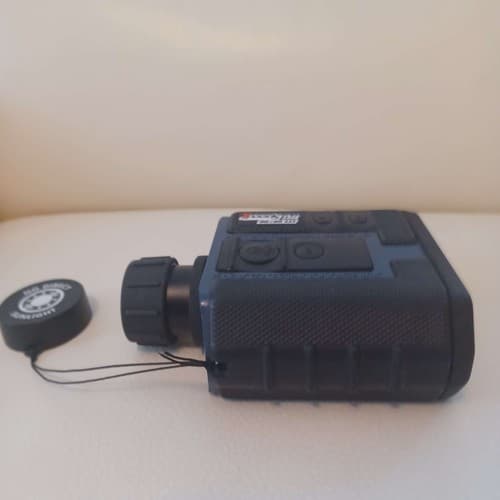
The Applied Speed Technologies LTI TruSpeed S unit with its lens cap
Our own TruSpeed S - 905 nm Class 1 laser, tripod-mountable.
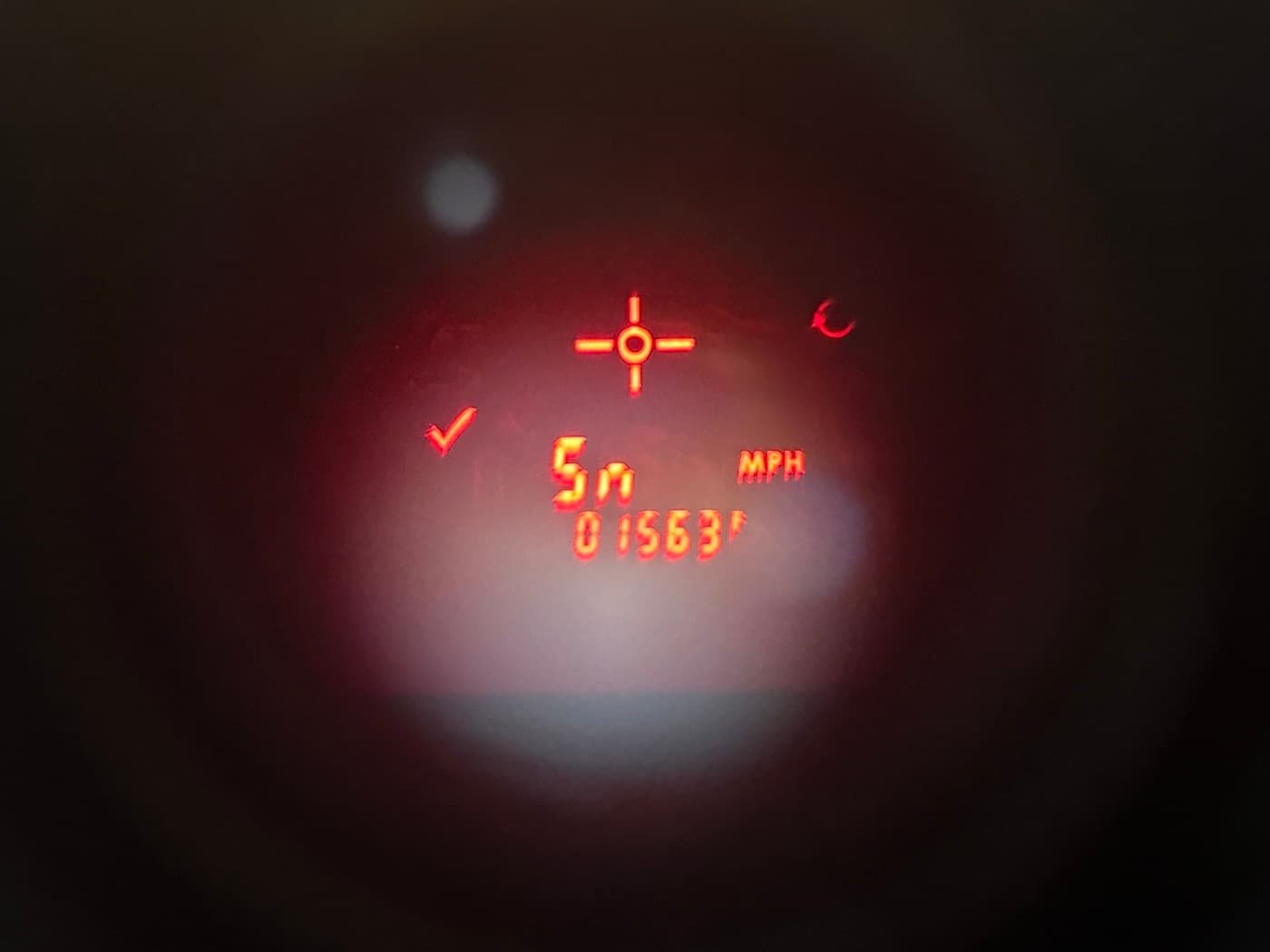
TruSpeed S in-scope display showing serial number Sn 01563
The unit reporting its own serial through the scope: Sn 01563 - the serial that appears on its calibration record.
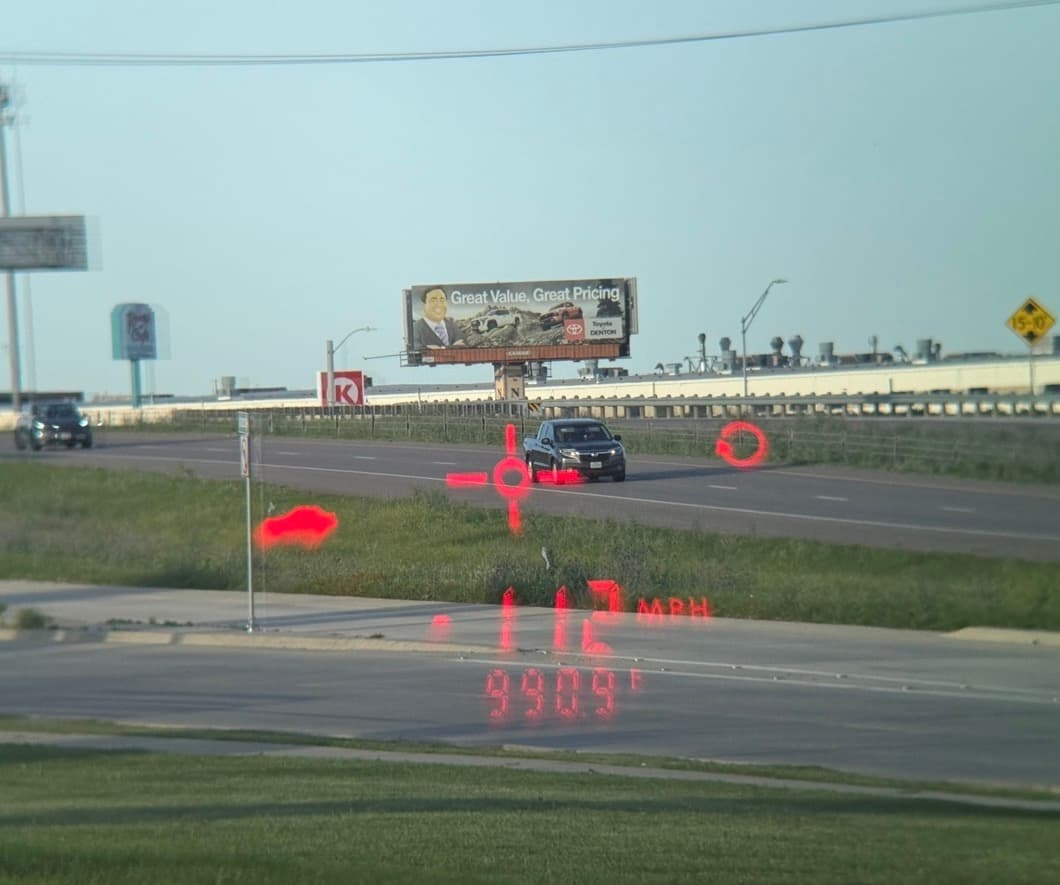
TruSpeed S heads-up display reading 112 MPH at 990.9 feet
In-scope HUD: 112 MPH target held at 990.9 ft. Speed and range on one frame.

Published specifications

Measurement
Time-of-flight infrared laser
Wavelength
905 nm, Class 1 eye-safe
Speed range
0–200 mph
Speed accuracy
±1 mph
Range (speed)
to 2,000 ft
Range accuracy
±0.5 ft
Beam divergence
3 mrad (≈3 ft @ 1,000 ft)
Acquisition
≈0.3 s typical

No FCC licence required - optical, not radio frequency.

LTI TruSpeed S in use - 3 videos

LTI TruSpeed S

Pushing the unit out toward the far end of its published range.

LTI TruSpeed S

A selection of clips of the TruSpeed S in ordinary use.

LTI TruSpeed S

Our reference laser working at long range in the field.
Kustom Pro Laser III

LIDAR

Kustom Signals, Inc.

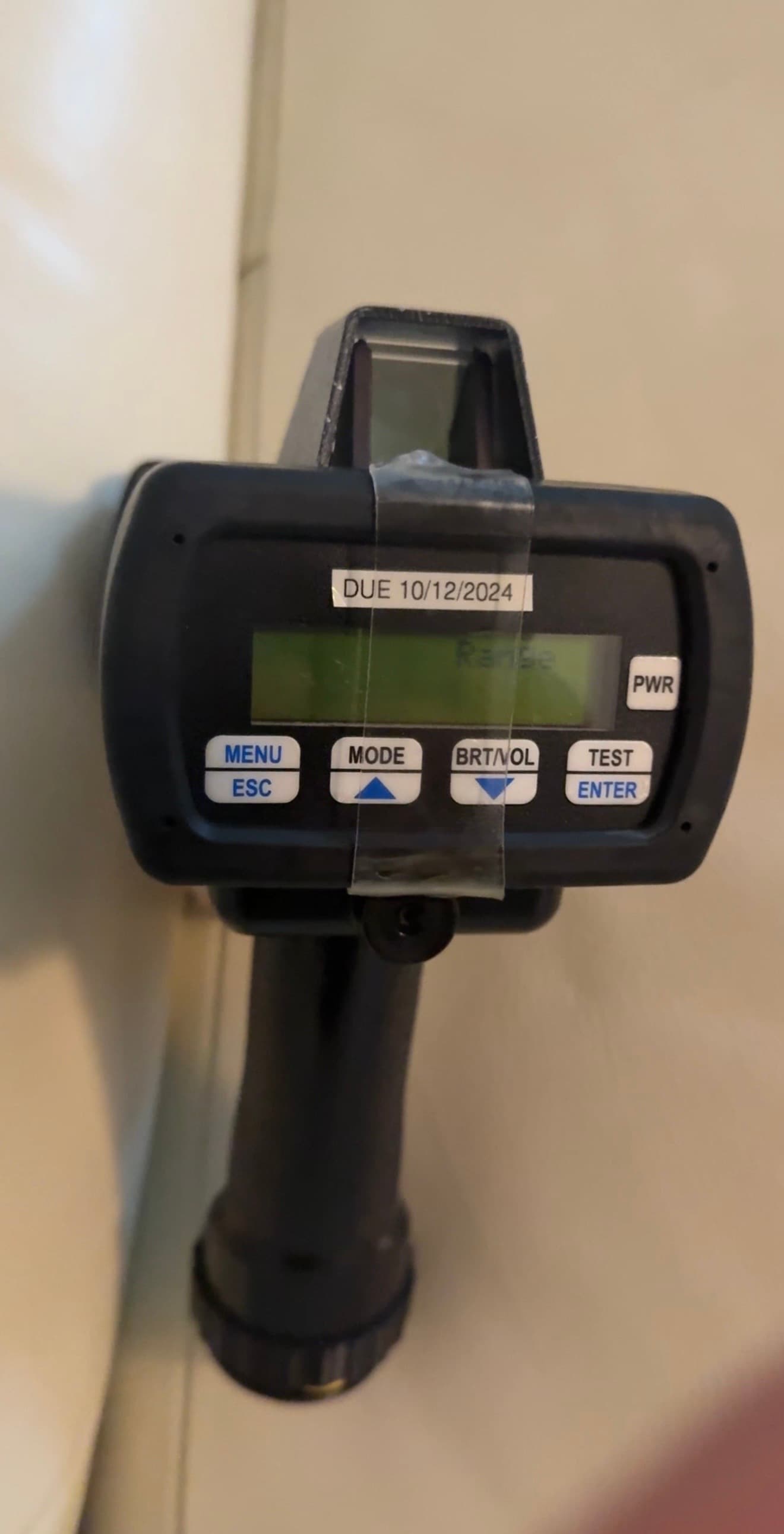
A long-reach laser with a dedicated range mode, and the unit we hand to clients during live operation sessions. Its 320 mph ceiling and 4,000 ft reach make it the one we bring for aircraft, drones and anything else that will not politely drive past at 45.

Client-operated | certification lapsed

This is the unit we put in your hands. It is accurate, and we verify it in the field against the TruSpeed S before every session, but its factory certification expired in October 2024 and has not been renewed. So it is a demonstration and rangefinding instrument rather than the unit of record: the numbers on your certificate come from the certified TruSpeed S and from the radar.

Kustom Pro Laser III handheld laser unit in range mode, calibration sticker reading DUE 10/12/2024
Pro Laser III in Range mode. Its calibration sticker reads DUE 10/12/2024, and we have left it in shot rather than crop it out.

Published specifications

Measurement
Time-of-flight infrared laser
Wavelength
905 nm, Class 1 eye-safe
Speed range
0–320 mph
Speed accuracy
±1 mph
Range
10–4,000 ft
Range accuracy
±1 ft
Beam divergence
3 mrad
Modes
Speed, Range, real-time range

No FCC licence required - optical, not radio frequency.

Stalker RLR

LIDAR

Applied Concepts / Stalker Radar

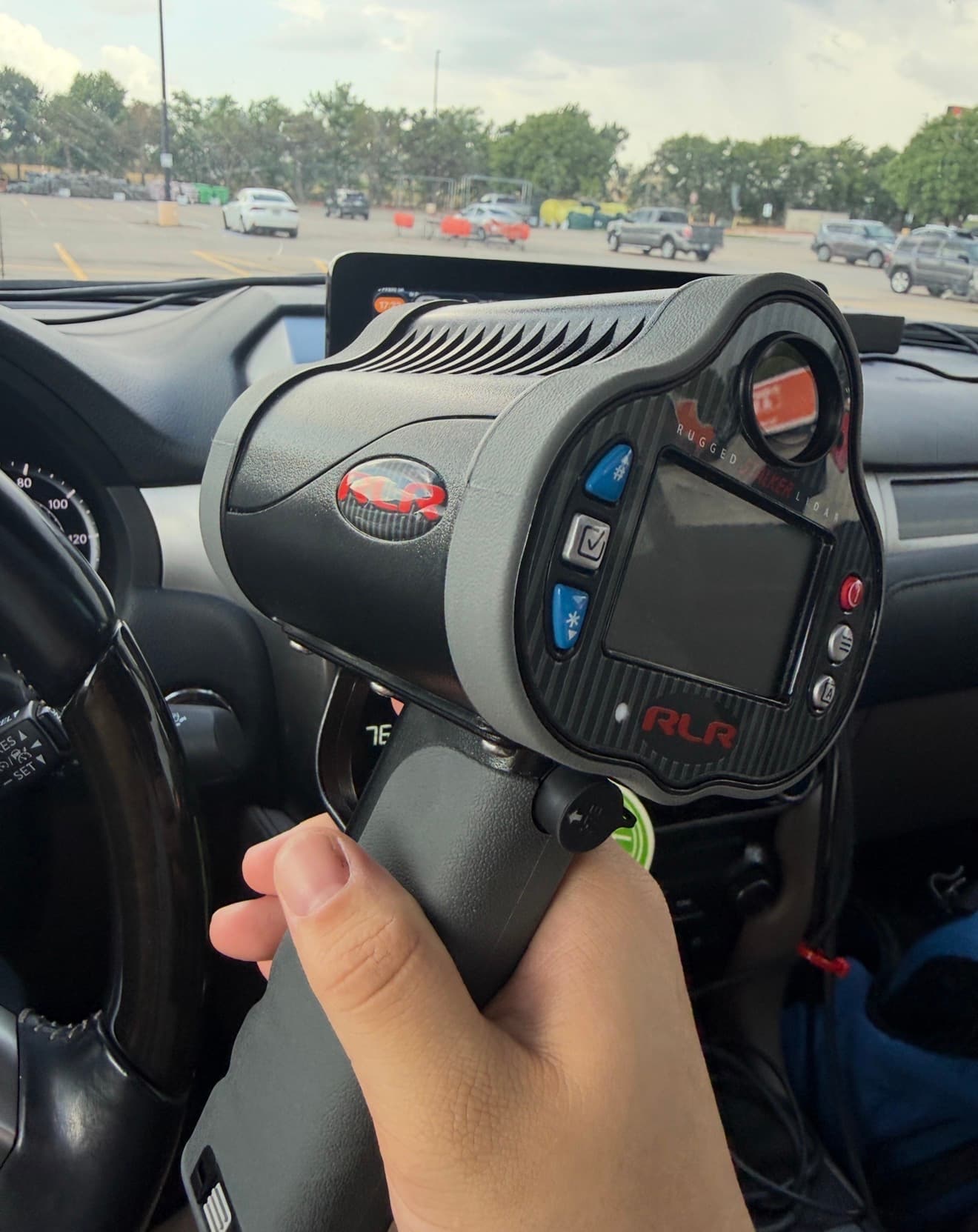
Rugged handheld lidar with Bluetooth data output, so readings come off the unit and into your report without anybody transcribing a number by hand. That data path is the reason it carries a lot of our recorded work.

Stalker RLR rugged lidar handheld unit
Stalker RLR - rugged handheld lidar with Bluetooth data output.
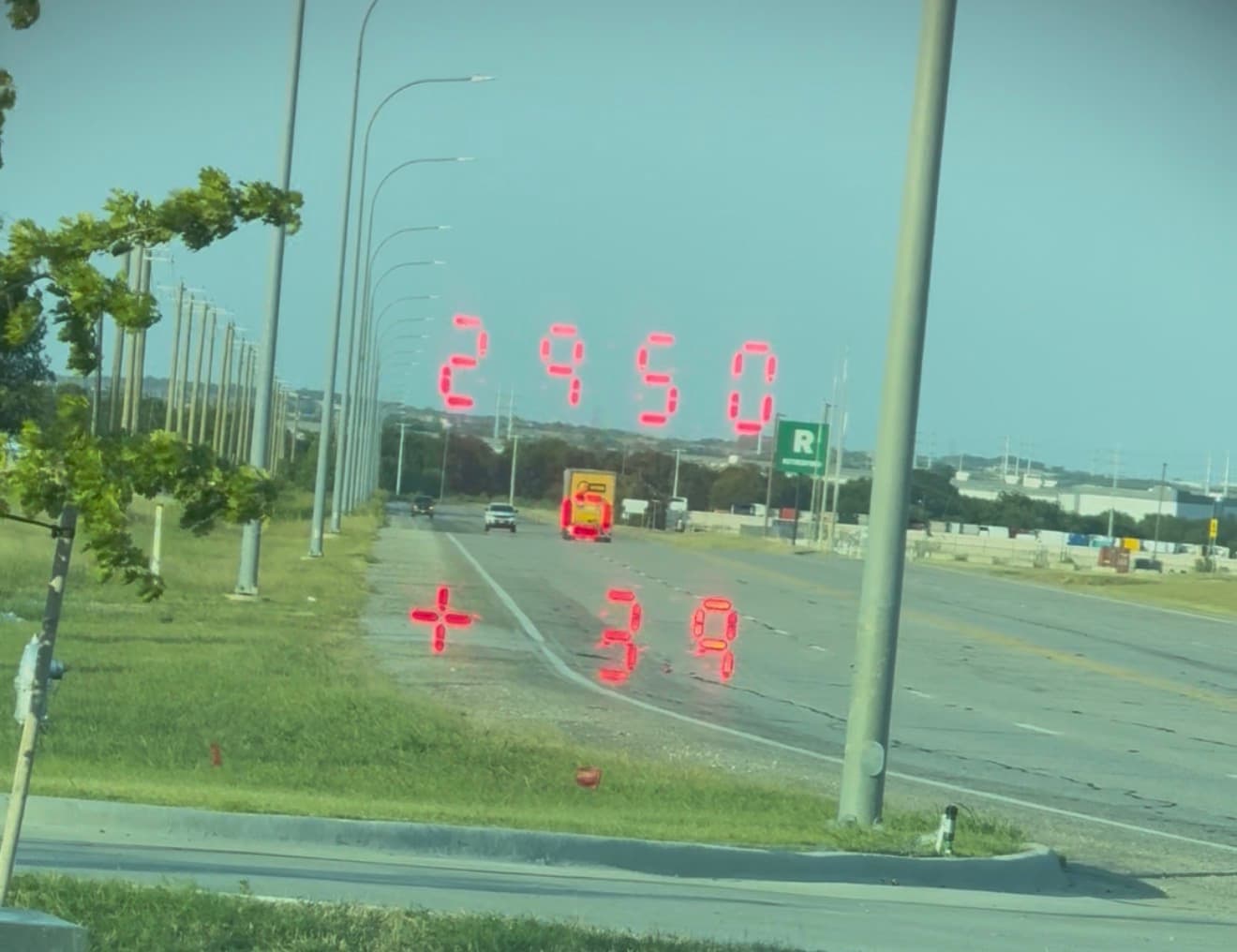
Stalker RLR scope view measuring a truck
RLR scope view: box truck acquired at 2950 ft, 39 MPH.

Published specifications

Measurement
Time-of-flight infrared laser
Wavelength
905 nm, Class 1 eye-safe
Speed range
0–320 mph
Speed accuracy
±1 mph
Range
to 4,000 ft
Range accuracy
±0.5 ft
Beam divergence
≈3 mrad
Data output
Bluetooth

No FCC licence required - optical, not radio frequency.

Stalker RLR in use - 1 video

Stalker RLR

Our rugged handheld lidar working in the field.

Digital Ally Laser Ally

LIDAR

Digital Ally / DragonEye Technology

Bright heads-up display and a very tight beam, which is what you want when the target you care about is third in a line of traffic. Good acquisition speed in daylight glare.

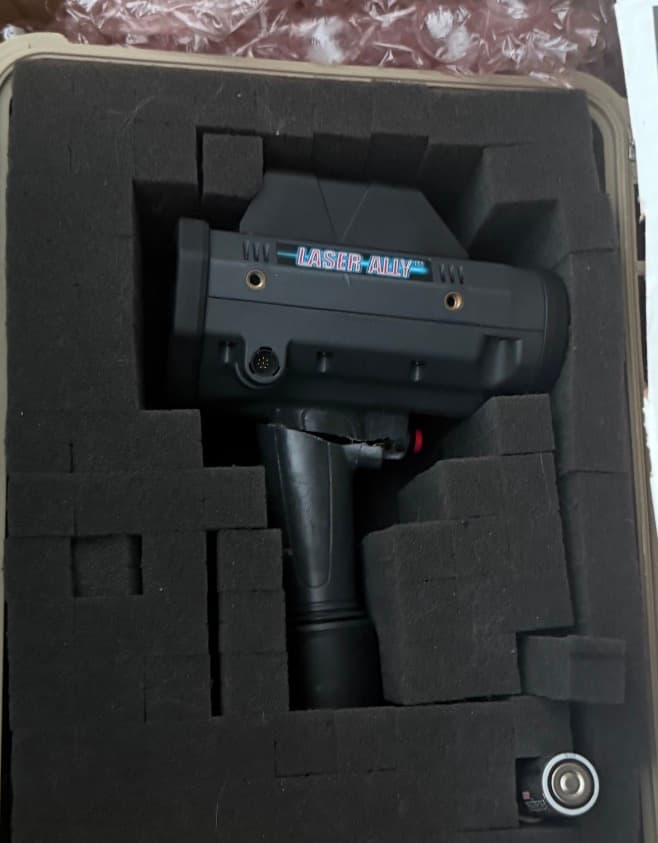
Digital Ally Laser Ally lidar unit in its case
Laser Ally in its transit case.
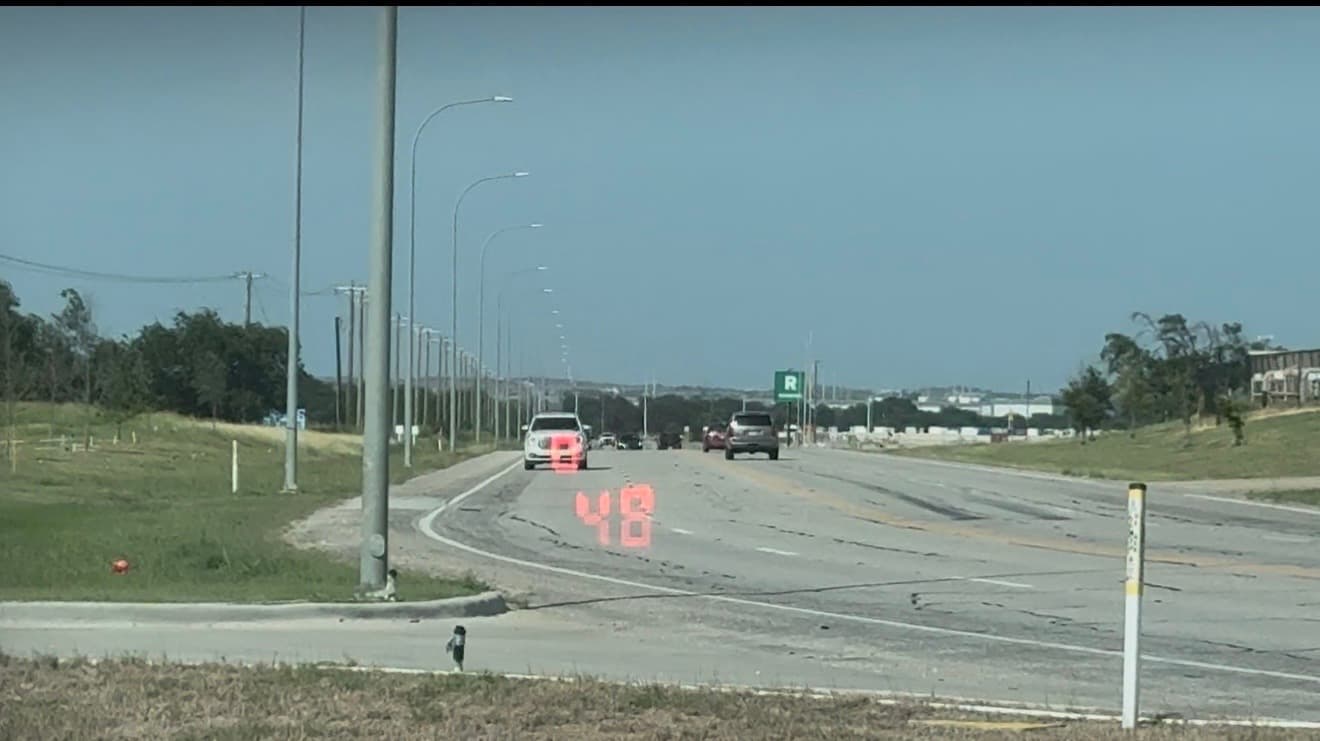
Laser Ally scope view showing a 48 MPH reading on a vehicle
Laser Ally HUD: 48 MPH lock on the lead vehicle, traffic behind it.

Published specifications

Measurement
Time-of-flight infrared laser
Wavelength
905 nm, Class 1 eye-safe
Speed range
0–320 mph
Speed accuracy
±1 mph
Range
to 4,000 ft
Range accuracy
±0.5 ft
Beam divergence
≈3 mrad
Display
In-scope heads-up display

No FCC licence required - optical, not radio frequency.

RADAR

Doppler radar units

Instant, continuous tracking that works on targets a laser struggles with. These are the units that carry an FCC licensing requirement.

Stalker Dual DSR

RADAR

Applied Concepts / Stalker Radar

Two antennas, front and rear, both directional. It tracks opposing and same-direction traffic at once and holds a continuous speed history rather than a single sampled number - which is exactly what a pacing question needs answered.

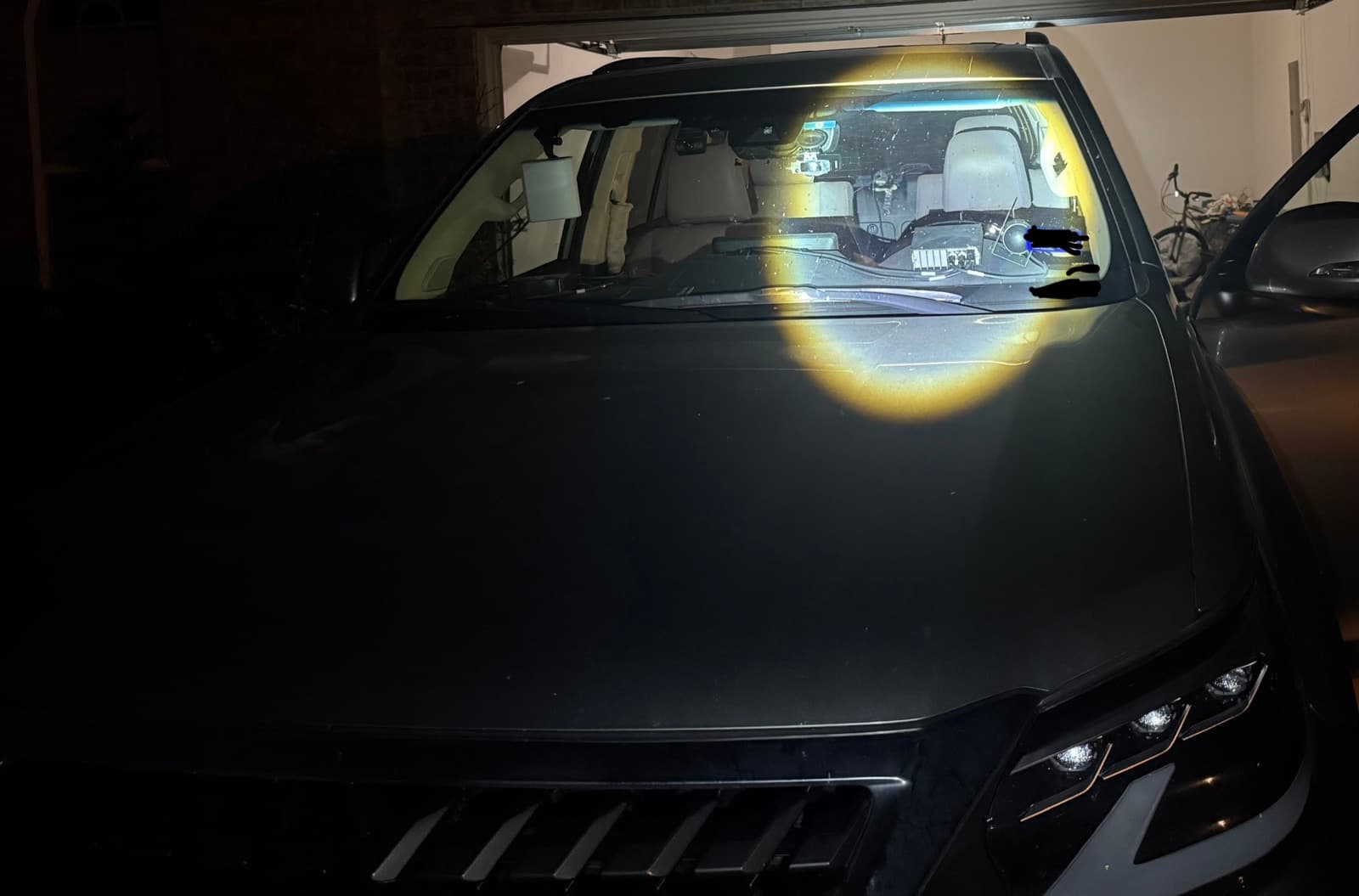
The Stalker Dual DSR installed in our vehicle, showing the front and rear antennas and the full setup
The installed Dual DSR: front and rear antennas and the complete setup in one shot.
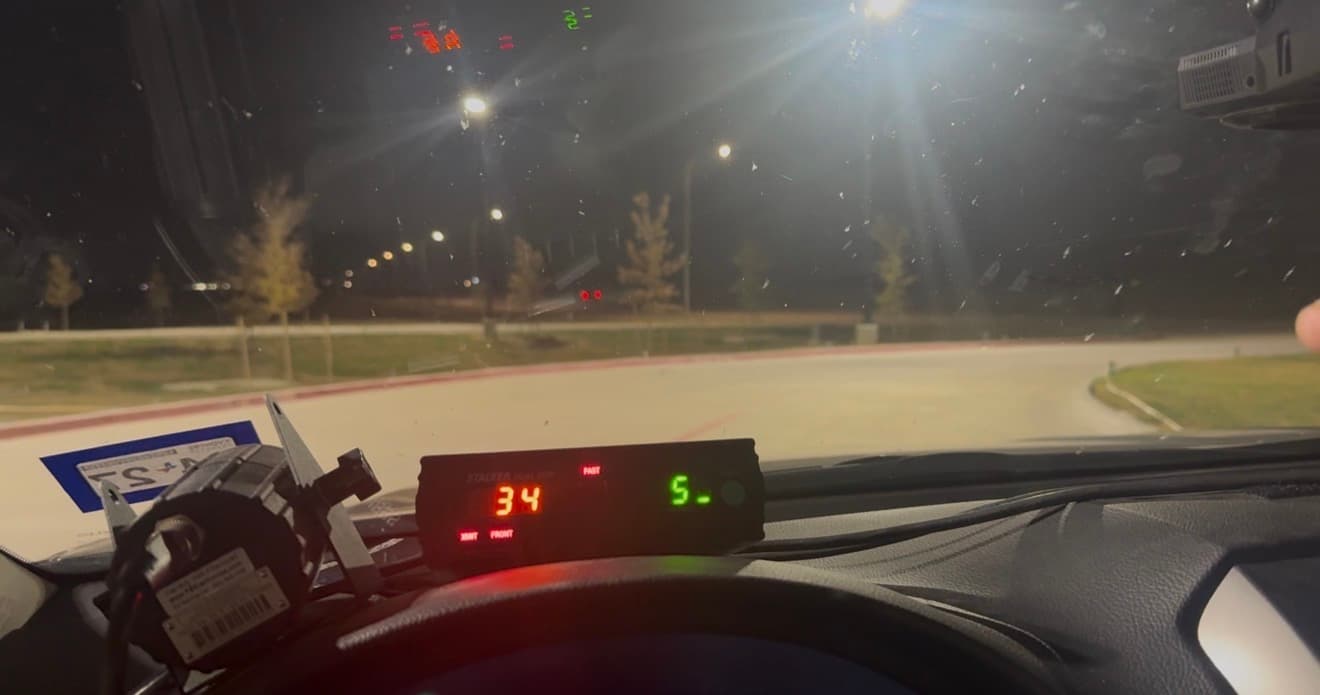
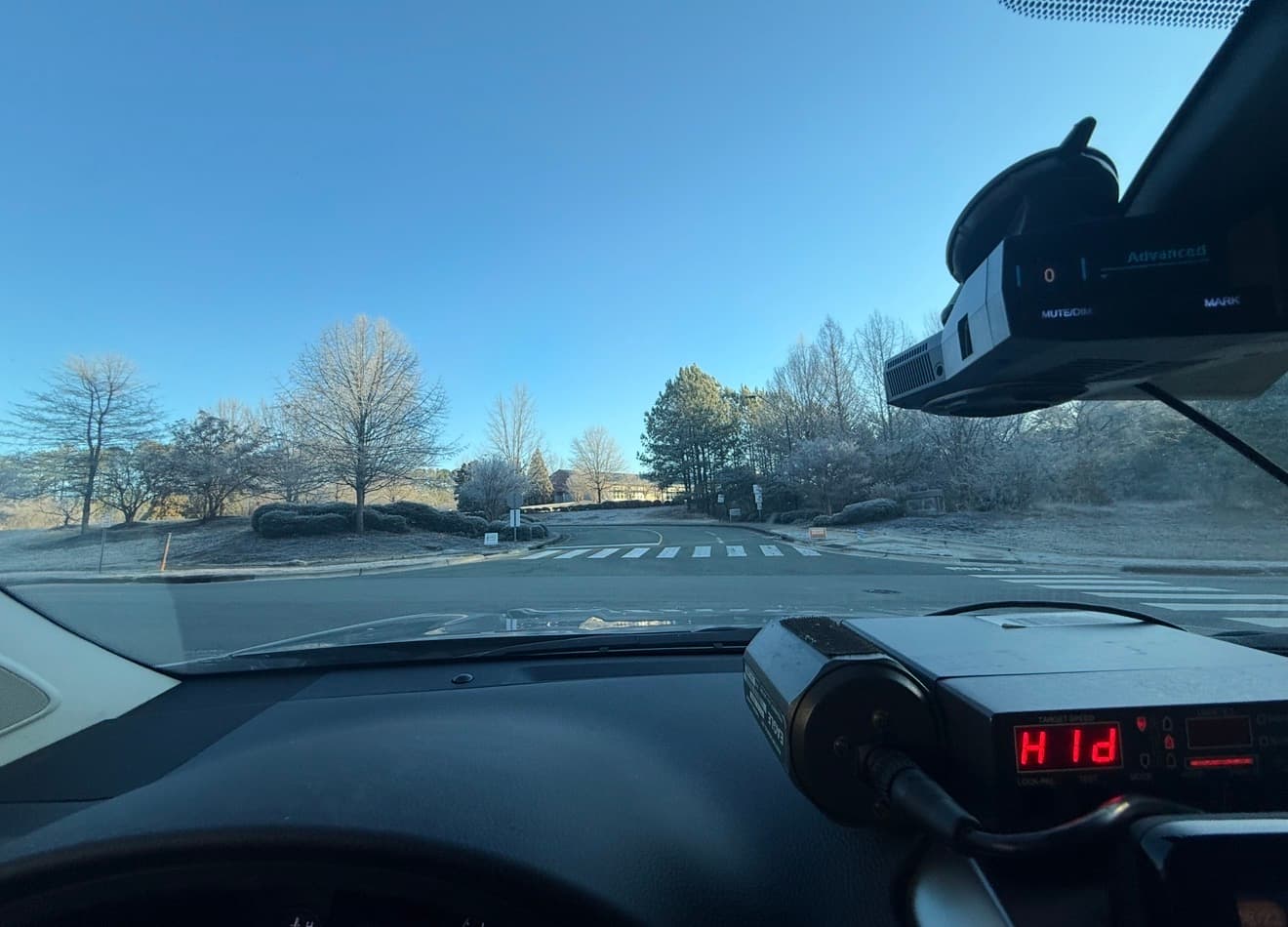
Stalker Dual DSR counting unit on a dashboard showing a 34 MPH target
Dual DSR counting unit, front antenna transmitting, target tracking at 34 MPH.

Published specifications

Measurement
Doppler radar
Band
Ka, 33.4–36.0 GHz (34.7 GHz)
Antennas
2 - front and rear, directional
Speed range
10–199 mph target
Patrol speed
20–200 mph
Accuracy
±1 mph stationary, ±2 mph moving
Modes
Stationary, moving same- and opposite-direction
Range
1 mile+ on large targets

FCC Part 90 station licence required for operation. Our application is pending.

Stalker Dual DSR in use - 1 video

Publishing once licensed

TX DPS trooper pulls over for 15+ over on motor speedway - aerial footage

This footage shows a RADAR unit transmitting. We will publish it once our 47 CFR Part 90 licence is granted - not before.

Stalker Dual DSR

Footage involving the Dual DSR.

Stalker II MDR

RADAR

Applied Concepts / Stalker Radar

Handheld Ka-band radar with direction sensing, and the unit that goes on a tripod for neighbourhood and school-zone speed studies. It will sit and count traffic all day without needing an operator to aim it at every single car.

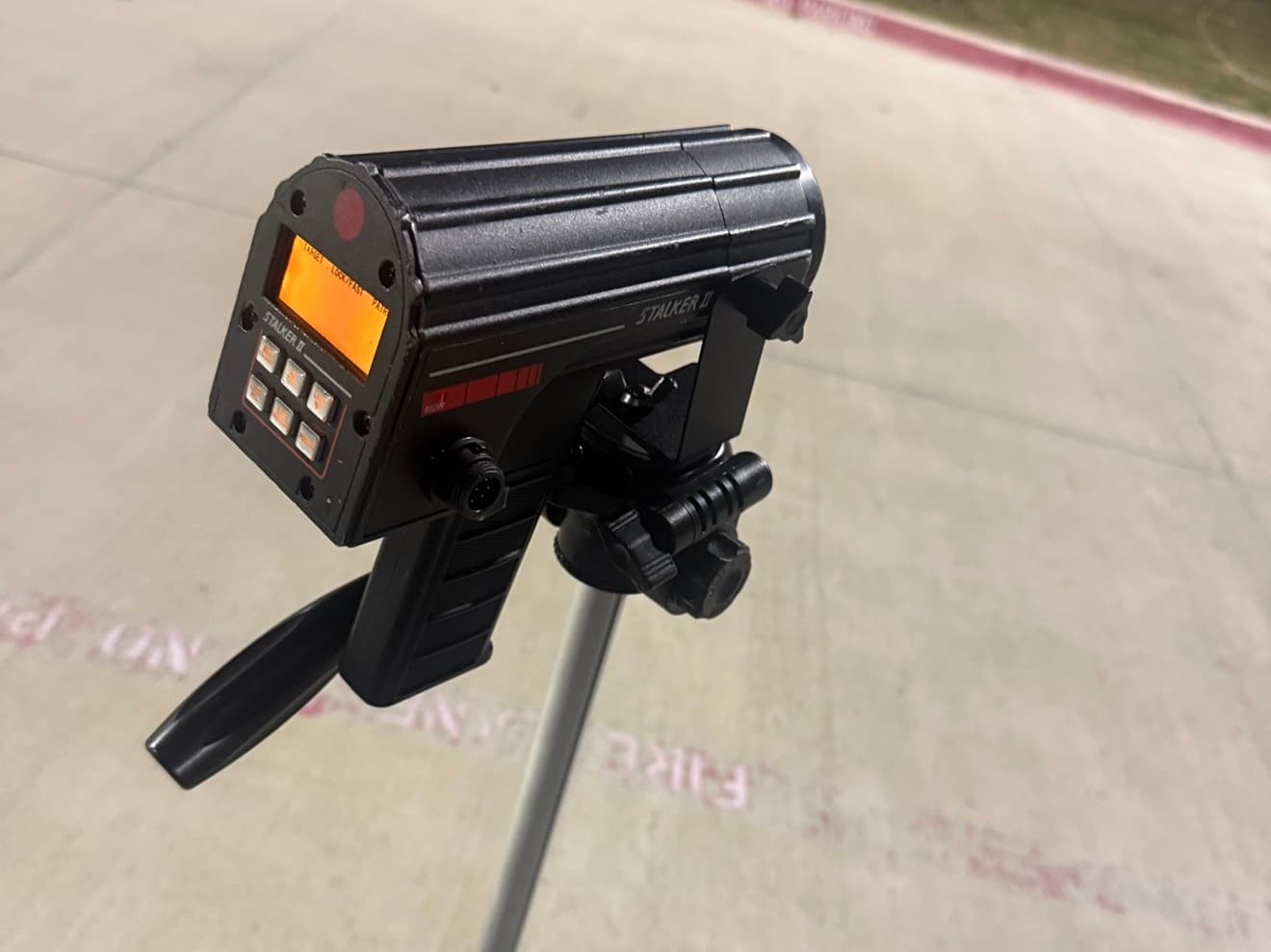
Stalker II MDR handheld radar mounted on a tripod
Stalker II MDR on a tripod - our standard rig for residential and school-zone speed studies.
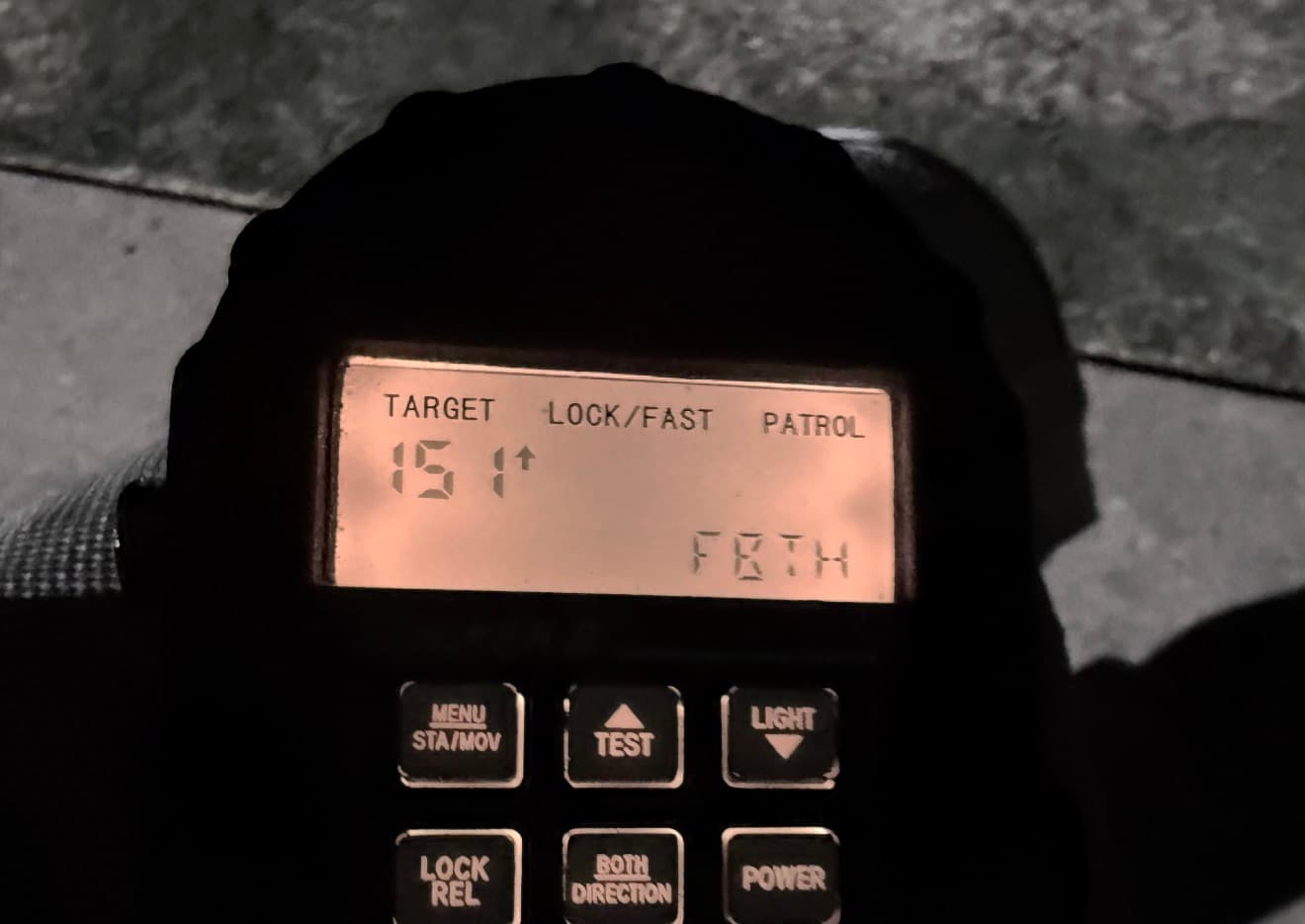
Stalker II MDR display showing a locked target speed of 151 MPH
Locked target reading 151 MPH in both-direction mode, patrol window clear.

Published specifications

Measurement
Doppler radar
Band
Ka, 34.7 GHz
Speed range
10–199 mph
Accuracy
±1 mph stationary, ±2 mph moving
Direction sensing
Both-direction (opposite / same)
Modes
Stationary and moving
Range
to 1 mile on large targets
Mounting
Handheld or tripod

FCC Part 90 station licence required for operation. Our application is pending.

Stalker II MDR in use - 1 video

Publishing once licensed

Stalker II MDR - radar bounce off a mirror

This footage shows a RADAR unit transmitting. We will publish it once our 47 CFR Part 90 licence is granted - not before.

Stalker II MDR

Demonstrating radar bounce with the Stalker II MDR.

Kustom Golden Eagle

RADAR

Kustom Signals, Inc.

Dash-mounted counting unit with same- and opposite-direction moving modes. We carry it as a reference and sanity check rather than as a measuring instrument: when the Golden Eagle and a Stalker agree to the mile per hour, that agreement is a useful confirmation that nothing has drifted.

Reference and sanity check only

The Golden Eagle is not used to produce the readings on your certificate. It rides along as an independent second opinion - a way to confirm the working units are still reading true - and nothing it displays is recorded as a result.

Kustom Golden Eagle radar counting unit mounted on a dashboard
Golden Eagle counting unit, dash-mounted and powered up.

Published specifications

Measurement
Doppler radar
Band
K 24.150 GHz or Ka 33.4–36.0 GHz
Speed range
10–199 mph
Accuracy
±1 mph
Modes
Stationary and moving, same/opposite direction
Display
Target speed, patrol speed, locked speed
Verification
Internal circuit test + tuning fork

FCC Part 90 station licence required for operation. Our application is pending.

Regulatory

FCC licensure and what it covers

RADAR - licence required

Application pending

Police-type Doppler radar is a deliberate radio transmitter operating in the licensed K band (24.150 GHz) and Ka band (33.4–36.0 GHz). Operating one is regulated by the FCC under 47 CFR Part 90, and a station licence is required to transmit.

Our Part 90 application is currently pending under application number [FCC application number - pending]. Until the licence is granted we schedule laser-only work, and we will tell you plainly which instruments are on the job before you book it.

LiDAR - no licence required

Lidar is optical, not radio. Our units emit a 905 nm infrared laser pulse and time its return, which puts them outside the FCC's radio licensing regime entirely. They are regulated instead as laser products - all four are Class 1 and eye-safe in normal operation.

This is also why LiDAR is the equipment we can hand to a client during a live operation session, and radar is not.

A note on motorcycles

For two wheels, radar is the preferable instrument. A motorcycle offers a laser very little flat, perpendicular surface to return a clean pulse from, so lidar locks come slower and less reliably. Radar needs no such surface. If you are booking a bike, the measurement will lean on the radar units - which is one more reason the FCC licence matters to us.

Specifications listed on this page are the manufacturers' published figures for each model and describe the model rather than the calibration state of an individual unit. Per-unit verification records are on the calibration page. All product names and trademarks are the property of their respective owners.

Want to see a unit before you book?

Ask and we will bring the relevant instrument to the consultation, show you its verification, and let you take a reading with it yourself.