
Services
Measurement, monitoring and rangefinding.
Every job is quoted individually. Tell us the object, the location and what you need to prove, and we will come back to you within a week.
Service 01
Speed measurement of a specific vehicle or object
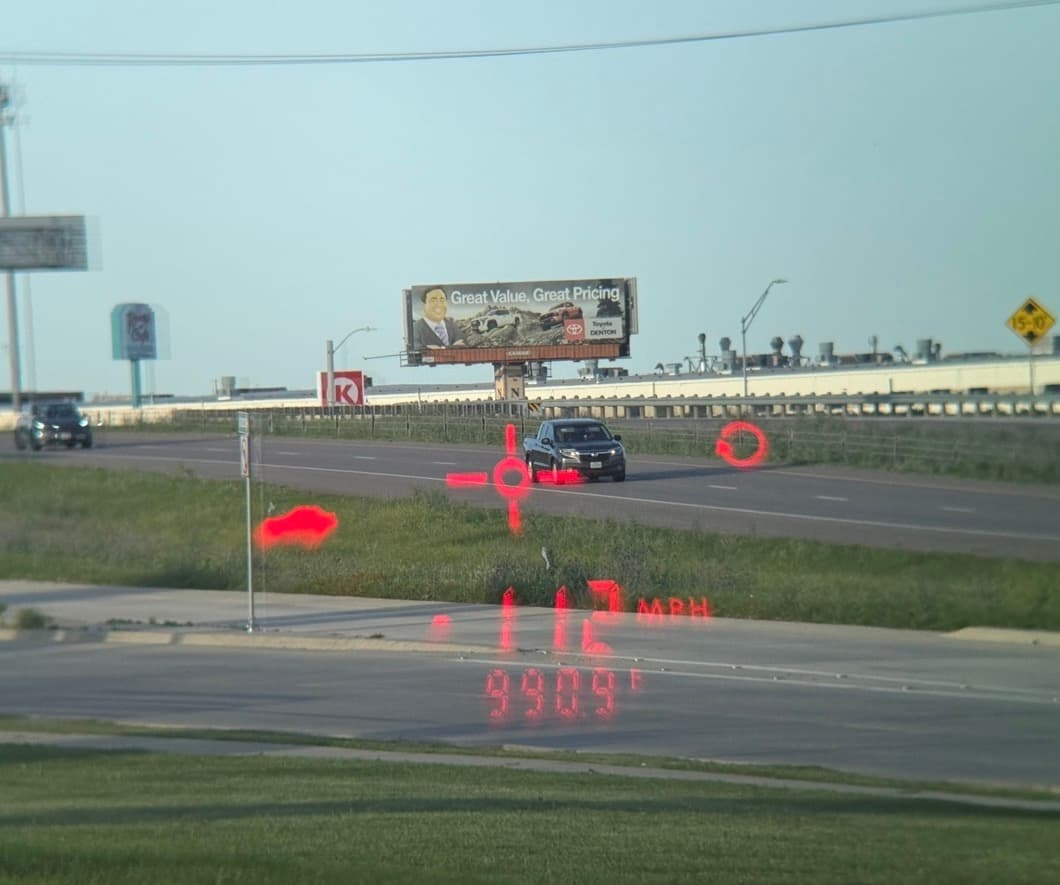
The core service. We measure the true speed of one vehicle or object against calibrated RADAR and LiDAR, at several speeds, with the readings recorded as we take them.
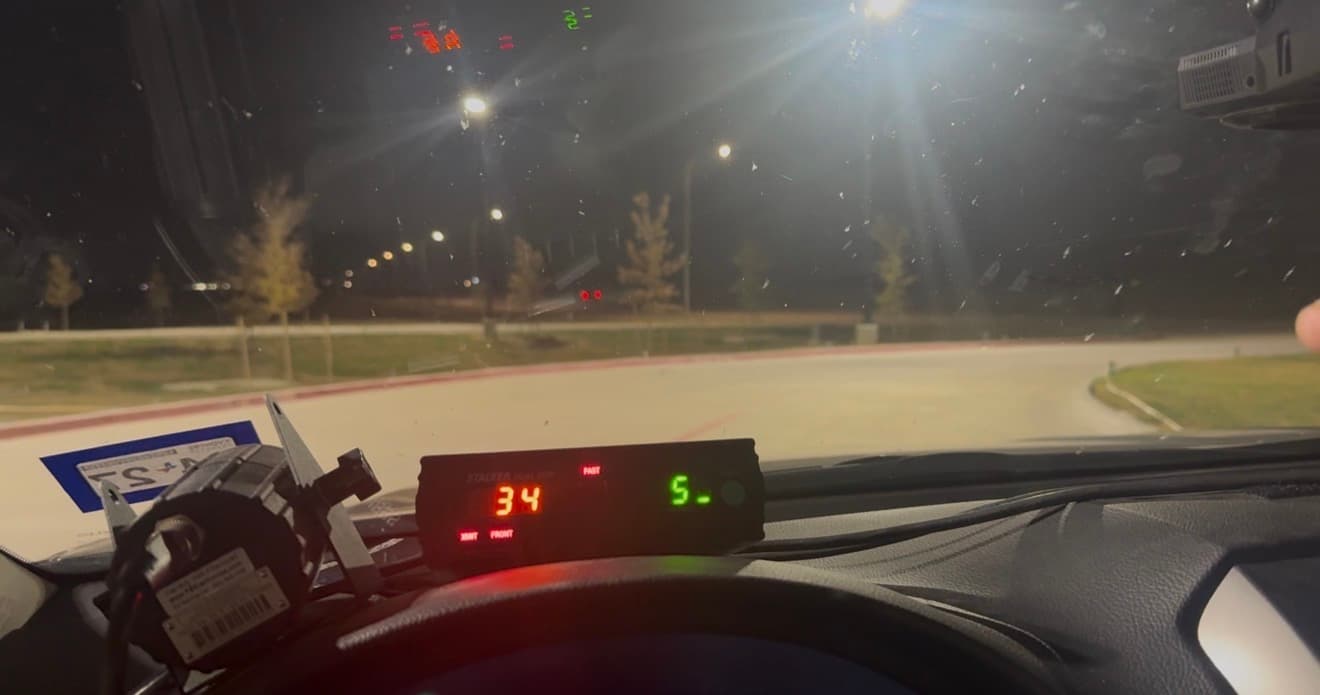
Because we run both technologies side by side, every number arrives with a second, independent opinion attached. Radar tracks you continuously and shows the speed as it happens; lidar takes pinpoint locks with an exact range on each. When a Ka-band radar and a 905 nm laser agree to the mile per hour, that is a far stronger result than either instrument could give on its own.
What you get
- Repeated readings at multiple hold speeds across the range you care about.
- Agreement between instruments within ±1 mph across those readings.
- Your indicated speedometer reading set against our measured speed, as an mph error and a percentage.
- The equipment used, with serial numbers, and the verification we performed on site.
- Conditions on the day - temperature, visibility, surface, and the measurement geometry.
Riding a motorcycle? We will lead with radar.
A bike presents very little flat, square-on surface for a laser to work with, so lidar locks are slower and less certain on two wheels. Radar has no such problem - it does not need a reflector. We still take laser readings where we can get them, but on motorcycles radar carries the measurement.
Service 02
Residential and spot speed monitoring
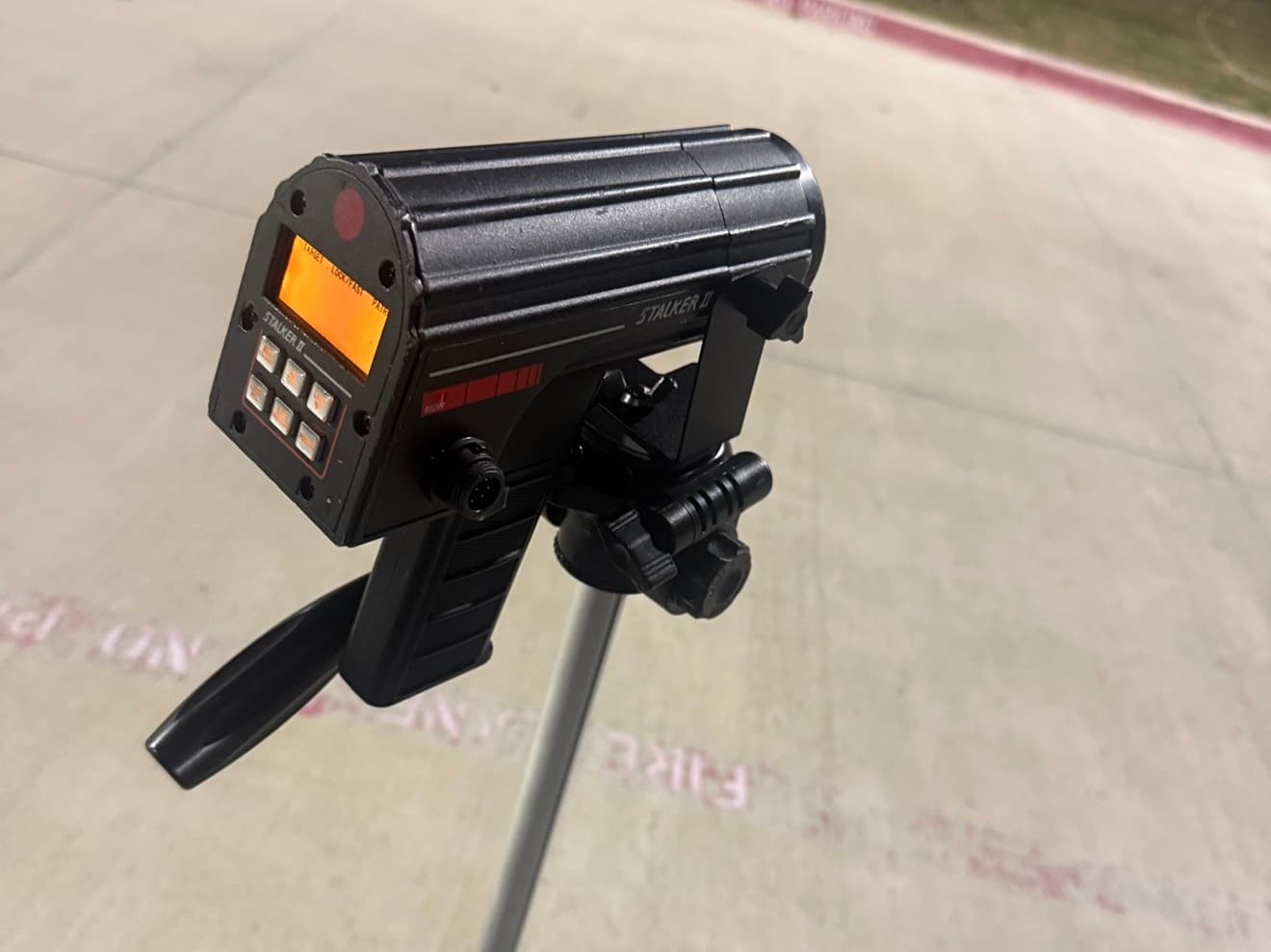
Speed studies for the places where speed actually matters to you - your street, your neighborhood, the approach to a school. We set up where you ask and record what really goes past, rather than what people assume goes past.
Tripod-mounted radar in both-direction mode will sit and count traffic in both directions without an operator aiming it at every individual car. The result is a distribution rather than an anecdote: how fast traffic actually moves on that road, at that hour, and how far the fast end of it runs above the posted limit.
School zones
Measure the approach during the hours the zone is actually active.
Neighborhood streets
Evidence for an HOA, a city petition or a traffic-calming request.
Spot checks
A single problem corner, junction or blind bend.
Before and after
Re-run the same site after signage or calming goes in.
Service 03
Rangefinding
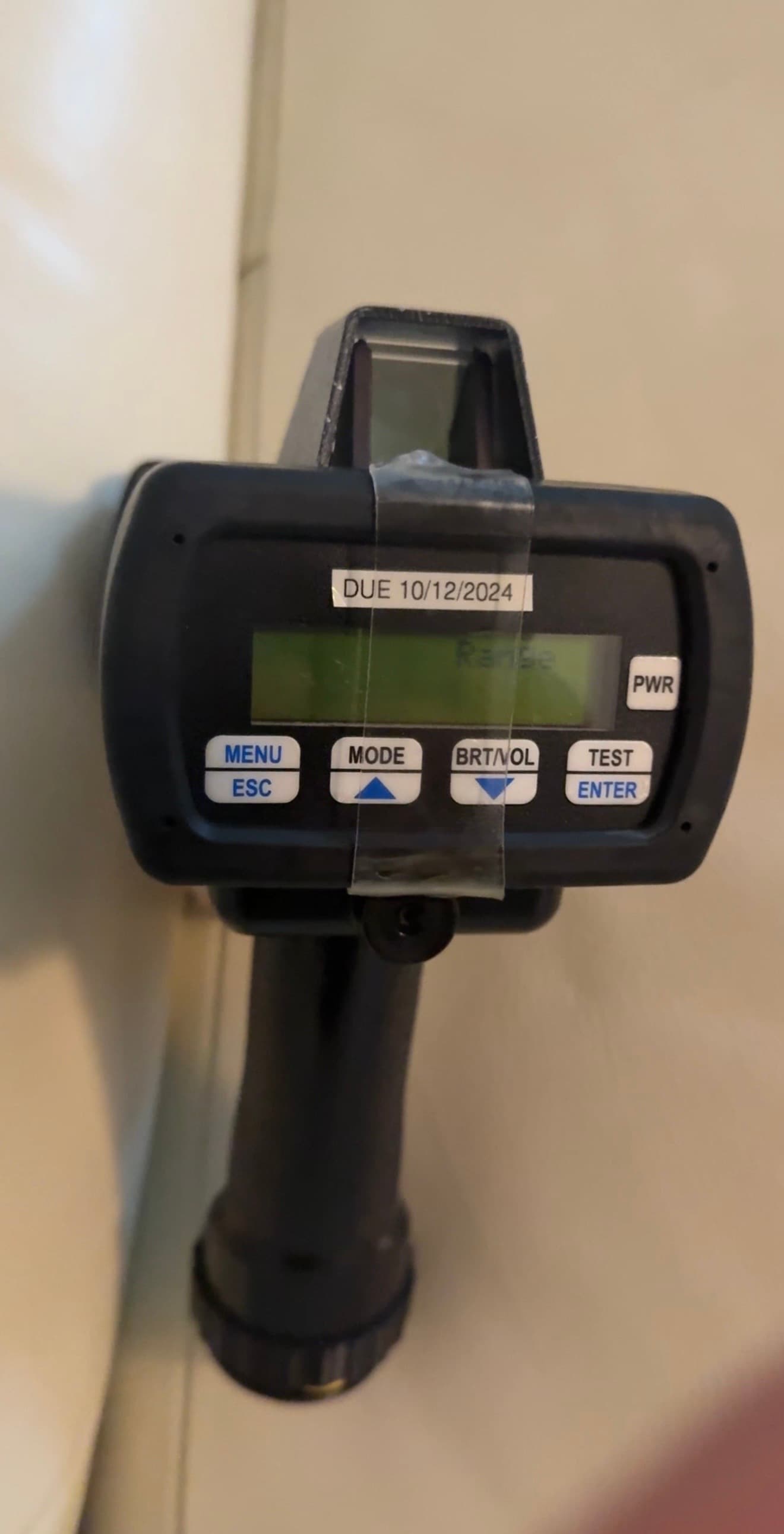
Every lidar unit in our inventory is a precision rangefinder as well as a speed instrument - the range is how it derives the speed in the first place. All of our lasers will range out to 4,000 ft, with range accuracy down to ±0.5 ft on the units that publish it.
That makes them useful well beyond speed work: sight-line and stopping-distance checks, site and frontage measurements, survey and layout distances, clearance checks, or simply establishing the exact known distance we then use to verify another instrument.
Range is also how we keep ourselves honest
A laser that ranges a known fixed distance correctly is a laser whose timing is sound. It is the simplest field check there is, it needs no equipment but a measured baseline, and we run it before we record a single speed for you.
Also available
Live operation, and everything that isn't a car.
Operate the equipment yourself
Come out with us and run the LiDAR. Under supervision you can aim the unit, take the lock and read the number straight off the display - no intermediary, no interpretation. Our lasers are 905 nm Class 1 and eye-safe in normal use, and we brief you on handling before anything gets switched on.
Clients do not operate the radar units. Transmitting on Ka band is the part that needs the FCC licence, and that stays with us.
Live operation terms →Flying, floating and otherwise not on a road
We measure moving objects. Cars are simply the most common one. Drones and UAS, boats and personal watercraft, light aircraft, rolling stock, RC and track machinery - if it moves and we can get a return off it, we can put a number on it.
Speeds up to 320 mph are inside the published range of our lidar units standing still, and up to 520 mph using radar and laser together from a moving platform. For anything faster, or for an unusual target, ask us first and we will tell you honestly whether we can measure it.
Pricing
Every job is quoted individually - the vehicle or object, the location, the number of runs and whether the site needs permission all move the number. Email us with what you have in mind and you will have a quote back within one week.
Request a quoteGet a quote
Tell us the vehicle or object, where you want it measured, and what you need to prove. We reply within one week.